

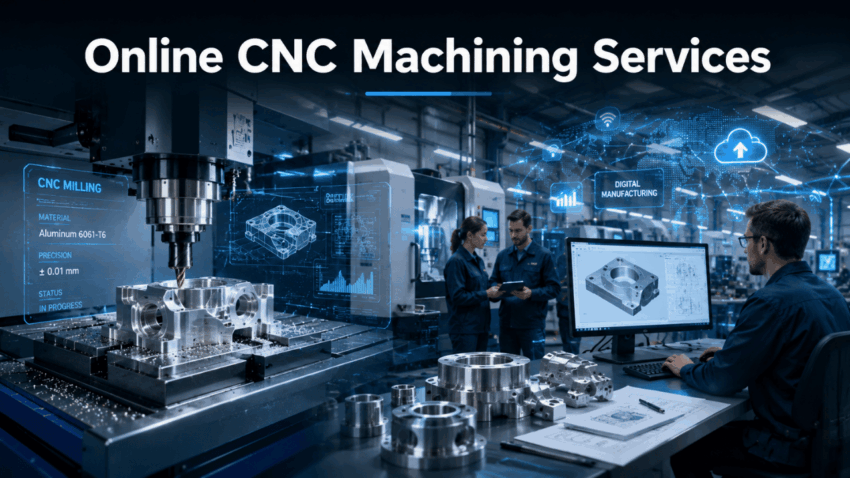
Online CNC machining service platforms have transformed the manufacturing process by enabling engineers, designers and buyers to upload a CAD file, define geometry and material, and receive an instant quote for precision cnc machined parts. This article explains how an online cnc machining service and the underlying cnc machining process work to deliver custom cnc parts and cnc parts for prototypes and production parts, outlines the cnc machining capabilities and variety of cnc machines available, discusses supported cnc machining materials from plastics to alloys and stainless steel, and details best practices for specifying tolerance, surface finish and secondary operations to ensure high quality precision cnc machining and cost-effective manufacturing services.
View China CNC Machining Service | Precision Parts Manufacturing —Lecreator for More Details
How does an online cnc machining service and cnc machine process work to get an instant quote?
An online cnc machining platform simplifies the machining process by automating quotation, process planning and material selection based on a submitted cad file and the declared geometry; once you upload a cad file and select material and finish options, the system leverages manufacturability rules, historical cnc machining costs and the machine shop’s capacity to generate an instant quote for custom parts. The machinery behind these services includes a wide variety of cnc machines — mills, lathes for cnc turning, 5-axis centers and edm equipment — and the online workflow maps your part geometry to the most appropriate machine, estimates cycle time, calculates material and tooling costs, and factors the selected machining tolerance and post-processing steps to produce a transparent price for cnc machined parts, allowing customers to get a quote and proceed immediately to ordering prototypes and production parts.
What information do I need to upload (CAD file, geometry, material) to get a quote?
To obtain an instant quote from an online cnc machining service, you should upload a fully defined cad file in an accepted format (commonly STEP, IGES, or native solid models), include detailed geometry, specify the material — whether aluminum, stainless steel, brass, polycarbonate or another alloy or plastic — and indicate required surface finish and tolerance levels; the more complete and accurate the cad and manufacturing notes, the more precise the cnc machining cost estimate will be. Additional useful information includes the desired quantity for prototypes and production parts, critical dimensions, hole and thread specifications, preferred machining operations (cnc milling, cnc turning, 5-axis), and any secondary operations such as anodizing, plating or heat treat so that the machine shop can account for those manufacturing services when producing the instant quote and scheduling the production run.
How do online cnc machining platforms calculate price for custom parts and machine parts?
Online cnc machining platforms calculate price by aggregating fixed and variable components of the machining process: material cost for the chosen metal and plastic, setup time and tooling amortization, cycle time per part based on the assigned machine (mill, lathe, 5-axis, edm), labor and overhead from the machine shop, and additional costs for precision cnc machining tolerances, surface finish and secondary processes; algorithms analyze part geometry from the cad file to estimate milling or turning time, tool path complexity, and potential fixturing challenges, enabling an accurate assessment of cnc machining costs for both prototypes and production parts. For more complex geometry or when tight machining tolerance and precision are specified, the platform adjusts pricing upward to reflect slower feed rates, specialized tooling, or advanced machines such as 5-axis and precision machining centers, while bulk orders for production parts typically benefit from reduced per-part cost due to amortized setup and improved machining efficiencies.
What turnaround times and lead times are typical after I get a quote?
Typical turnaround times after receiving an instant quote vary by the complexity of the parts made, the chosen material and finishing options, and whether the order is a prototype or a larger production run; many online cnc machining services offer expedited schedules for single prototypes with lead times measured in days, while standard lead times for small batches commonly range from one to three weeks, and full production runs can be scheduled over several weeks depending on quantity, machine availability and required post-processing. Precision cnc machining and stringent machining tolerance or complex operations such as 5-axis machining or edm may extend lead times due to additional setup, inspection and potential secondary processes like heat treat or coating, whereas simple milling or turning of common metals and plastics often benefits from rapid scheduling and faster shipping options provided by a responsive cnc shop.
What cnc machining capabilities, mills, and machines are available for custom cnc machining?
A modern online cnc manufacturing network typically provides a variety of cnc machining capabilities including 3-axis and 5-axis cnc milling, cnc turning on lathes, swiss-style turning for small precision parts, and edm for delicate or complex internal geometries; these choices allow production of a wide spectrum of custom cnc parts in both metal and plastic and support the machining process for prototypes and production parts with varying levels of precision and surface finish. Machine selection is driven by the machining process required: simple prismatic geometry is commonly handled by mills and cnc milling centers, rotational features and turned machine parts use cnc turning, complex contoured surfaces and undercuts often require 5-axis machining, and hardened steels or intricate cavities can be addressed via edm, ensuring that the manufacturing services available match the design intent and material constraints of the parts made.
Do you offer cnc milling, cnc turning, 5-axis machining and edm for complex geometry?
Yes, comprehensive online cnc service providers offer cnc milling and cnc turning as core capabilities and extend their portfolio to include 5-axis machining and edm to handle complex geometry; cnc milling is widely used for creating intricate pockets, slots and features, cnc turning efficiently produces cylindrical machine parts with high concentricity, 5-axis machining enables multi-sided access and complex contours with minimal fixturing, and edm provides a solution for precision features in hardened alloys where conventional cutting tools would be impractical. These complementary technologies allow a machine shop to deliver precision cnc machining for custom cnc parts across a broad range of materials and geometries, ensuring that prototypes and production parts achieve required dimensions and surface conditions with consistent quality.
What precision cnc and precision machining tolerances can different machines achieve?
Precision achievable varies by equipment and process: standard milling and turning operations commonly deliver tolerances in the range of ±0.1 mm to ±0.05 mm for typical cnc parts, precision cnc machining centers and swiss-type lathes can attain tighter tolerances down to ±0.01 mm or better for critical features, and edm or specialized grinding operations are used when micron-level tolerances are required for high-precision applications. The choice of machine and machining tolerance must consider part geometry, material properties, and measurement capabilities; while precision cnc machining can meet demanding specifications, tighter machining tolerance typically increases cnc machining costs and may necessitate additional inspection and certification to ensure that production parts meet the specified tolerance across the entire lot.
When is sheet metal fabrication or other manufacturing services a better choice than milling?
Sheet metal fabrication and other manufacturing services such as stamping or injection molding can be more appropriate and cost-effective than milling when the parts made consist primarily of thin-walled, flat or formed geometries that are widely used in enclosures, brackets and panels; sheet metal fabrication offers advantages in speed and cost for high-volume runs, especially when the design lends itself to bending, laser cutting and forming rather than material removal. Conversely, milling and precision machining remain preferable for parts requiring tight tolerances, complex 3D geometry, deep cavities or specific mechanical properties that sheet metal cannot provide; evaluating the manufacturing process early in the design phase helps determine whether custom cnc machining, sheet metal fabrication or another custom manufacturing approach best meets functional, financial and schedule requirements.
Which cnc machining materials are supported for parts made — plastic, metal and alloys?
Online cnc machining services support a broad array of cnc machining materials ranging from engineering plastics like polycarbonate and ABS to common metals and alloys such as aluminum, stainless steel, brass and various steel grades, enabling fabrication of both prototype and production parts that meet specific mechanical, thermal and chemical requirements. The selection of material influences corrosion resistance, chemical resistance, machinability and achievable surface finish, and reputable cnc manufacturing platforms provide guidance on material trade-offs and compatibility with the chosen machining process to ensure reliable performance of the final cnc machined parts.
Can you machine stainless steel, brass, aluminum, polycarbonate and other plastics?
Yes, established online cnc shops routinely machine stainless steel, brass, aluminum, polycarbonate and a wide range of other plastics and alloys; each material presents unique considerations for tooling, spindle speed and feed rate — for example, stainless steel often requires slower cutting speeds and rigid fixturing to maintain precision and reduce heat-related deformation, brass machines readily with excellent surface finish potential, aluminum is widely used for prototypes and production parts due to its machinability and corrosion resistance, and polycarbonate and other plastics require attention to chip evacuation and heat management to avoid melting or surface defects. By specifying the correct material in the cad file and quoting process, customers ensure the machining process is optimized for the material’s properties and intended application.
How do material choices affect corrosion resistance, chemical resistance, and surface finish?
Material selection directly impacts corrosion resistance, chemical resistance and achievable surface finish: stainless steel provides superior corrosion resistance and can be polished or passivated for enhanced longevity in harsh environments, brass offers good corrosion resistance and attractive plating or finishing options for decorative machine parts, aluminum provides a favorable strength-to-weight ratio and can be anodized to improve surface hardness and corrosion resistance, while engineering plastics like polycarbonate and certain polymers deliver excellent chemical resistance and electrical insulation but may be prone to surface scratching or require specific finishing techniques. Understanding the interplay between the chosen alloy or plastic and the desired surface finish and environmental conditions helps guide both the cnc machining design and post-processing choices to ensure performance and aesthetic goals are met for the parts made.
Are there limitations for thin walls, deep cavities or specific geometries with certain materials?
Yes, there are limitations: thin walls can deform or vibrate during machining, deep cavities may be difficult to reach with standard end mills, and specific geometries in certain materials can present challenges such as poor heat dissipation in plastics or workhardening in steels; online cnc machining platforms often analyze the cad file geometry to identify features that exceed recommended aspect ratios, wall thickness minimums, or tool-access constraints and may suggest alternative materials, revised geometry, or different manufacturing processes like edm or sheet metal fabrication to improve manufacturability. Designers should collaborate with the cnc shop or use design for manufacturing guidance provided by online cnc manufacturing services to mitigate issues related to thin features, deep pockets and unsupported geometries for reliable production of custom cnc parts.
How should I specify tolerance, machining tolerance and precision for custom parts?
Specifying tolerance and precision for custom parts requires balancing functional needs with cost and manufacturability: provide clear tolerances on the cad drawing or within the cad file for critical dimensions, indicate geometric tolerances where form, orientation or location are essential, and differentiate between prototype tolerances — which may be more lenient to control costs — and production tolerances that ensure interchangeability during full manufacturing runs. Use standard tolerance tables where possible and engage the cnc machining service early to confirm achievable machining tolerance on the chosen machines, since tighter tolerances generally increase cnc machining costs and may necessitate additional inspection and secondary finishes to guarantee compliance across production parts.
What are common tolerance standards for prototypes versus production parts?
Common tolerance standards differ by application: for rapid prototypes, tolerances of ±0.1 mm to ±0.25 mm are often acceptable and keep cnc machining costs low, whereas production parts that must fit or assemble precisely typically require tolerances in the range of ±0.05 mm to ±0.01 mm or tighter depending on the function; critical interfaces or high-precision assemblies might call for even more stringent tolerances achievable via precision cnc machining, cnc turning on high-precision lathes, or post-machining grinding and inspection processes. Determining the correct tolerance standard involves assessing the end-use, assembly requirements and whether secondary processes or measurement certification will be applied to the production parts.
How do tight tolerances affect cost and manufacturability on different cnc machines?
Tight tolerances affect cost and manufacturability by increasing setup time, requiring higher precision machines, specialized tooling, slower feed rates and more intensive inspection, all of which raise cnc machining costs; for example, achieving micron-level precision typically requires precision cnc machining centers, temperature-controlled environments, and additional operations like grinding or lapping, whereas looser tolerances can be met on standard mills or lathes with lower per-part costs. The platform or machine shop will evaluate whether the specified machining tolerance is realistic for the chosen material and geometry and may recommend design adjustments, alternate machines such as 5-axis or swiss-type lathes, or secondary processes to meet the tolerance while controlling overall manufacturing costs for production parts.
When should I consider precision cnc machining or secondary processes to meet tolerance?
You should consider precision cnc machining or secondary processes when the part’s function demands tight dimensional control, surface integrity or specific mechanical properties that exceed the capabilities of standard milling and turning; secondary processes like grinding, honing, edm or precision finishing and heat treating are appropriate when critical tolerances, surface finish specifications or hardness requirements are not achievable in a single machining operation. Early engagement with the cnc shop and specifying these needs on the cad file allows the online cnc machining service to include relevant manufacturing services and quality inspection steps in the instant quote and production plan to ensure that the delivered parts meet all functional and regulatory requirements.
What surface finish options and post-processing are available for cnc machined parts?
Surface finish options and post-processing available from an online cnc manufacturing service typically include mechanical polishing, bead blasting, anodizing for aluminum, plating for brass or stainless steel, passivation, painting, powder coating, and a variety of coatings for improved corrosion resistance, chemical resistance and wear properties; secondary operations such as deburring, heat treat, shot peening and specialized surface texturing are also commonly offered to tailor the finish and functional characteristics of cnc machined parts. The selection of surface finish depends on material, desired Ra values, visual appearance and environmental exposure, and professional machine shops will recommend appropriate post-processing to meet both aesthetic and performance specifications for production parts.
Which finishes are typical for metal parts versus plastic parts (polish, anodize, plating)?
Metal parts commonly receive finishes like anodize for aluminum to increase corrosion resistance and surface hardness, plating (nickel, chrome) for brass and steel to enhance appearance and wear resistance, passivation for stainless steel to improve corrosion resistance, and polishing or grinding for low Ra surface finishes; plastic parts such as polycarbonate typically utilize polishing, flame polishing or chemical smoothing to improve visual clarity and reduce surface roughness, while painted or textured coatings can enhance aesthetic or tactile properties. The machine shop will advise on compatible finishing techniques for the selected material, as some finishes require specific base material properties or pre-treatments to achieve consistent results across cnc machined parts and production parts.
Can you provide surface finish values (Ra) and visual samples before production?
Many online cnc machining services can provide typical surface finish values (Ra) for common processes and, where feasible, supply visual or part samples prior to full production to validate appearance and functional performance; engineers should request Ra specifications in the design documentation and communicate if a visual sample or first article inspection is required, especially for production parts where batch consistency and surface finish are critical. When surface finish values are specified, the machine shop includes inspection and verification steps in the manufacturing services, offering measurement reports and, where necessary, photographic samples to ensure the parts made conform to quality expectations.
Can online cnc manufacturing handle prototypes, small batches and full production runs?
Online cnc manufacturing is designed to handle the full spectrum from single prototypes to small batches and full production runs, offering flexible machining process options, diverse machine capabilities and scalable manufacturing services to meet varying volume, tolerance and scheduling requirements; prototypes and low-volume runs benefit from rapid quoting and quick turn milling or turning, while larger production parts utilize optimized tooling and batching strategies to reduce per-part cnc machining costs and maintain consistent quality across the run. The integrated workflow of many online cnc services also supports design for manufacturability feedback, inspection and certification, and batch traceability for production parts, making them suitable for both product development and serial manufacturing.
How do pricing and lead time scale from prototype to production parts?
Pricing and lead time scale with volume: prototypes typically incur higher per-part costs due to single-setup overheads, expedited scheduling and limited amortization of tooling, while production parts see a reduction in per-unit cost as setup time and tooling are spread across a larger quantity and machining processes become more efficient; lead times for prototypes can be extremely short to support rapid iteration, but production lead times depend on quantity, machine capacity and required post-processing and inspection, though larger batches often enable more predictable scheduling and economies of scale that reduce unit cost over time.
Is there support for design for manufacturability to optimize parts made for CNC?
Yes, reputable online cnc shops and platforms commonly offer design for manufacturability (DFM) feedback to optimize parts for cnc machining, helping designers adjust geometry, select appropriate materials, and set realistic machining tolerance and surface finish targets that minimize cost and improve yield; DFM can identify opportunities to reduce machining time, avoid thin walls or deep cavities that complicate the machining process, and suggest alternate manufacturing services such as sheet metal fabrication or 3d printing when those processes better suit the geometry or volume. Early DFM engagement streamlines the manufacturing process, reduces the likelihood of rework, and ensures the final cnc machined parts meet functional and economic goals.
Do you provide quality inspection, certification and batch traceability for production runs?
Many online cnc machining services provide quality inspection, measurement reports, certification (such as material certificates or ISO-compliant documentation), and batch traceability for production runs to ensure compliance with customer requirements and regulatory standards; these services commonly include first article inspection (FAI), statistical process control, and other quality assurance measures that validate machining tolerance, surface finish and critical features across the batch. Traceability and certification give manufacturers and end users confidence that the machined parts will perform reliably in their intended application and facilitate accountability throughout the manufacturing process.
What are common cnc machining faqs about quoting, file requirements and manufacturing services?
Common cnc machining faqs typically address accepted cad file types, how to specify tolerances and notes, how scrap and revisions are handled, and payment, shipping and warranty options; online cnc platforms aim to minimize ambiguity by listing accepted cad file formats (STEP, IGES, DXF for 2D, and common native files), providing guidance on layer naming and tolerance callouts, and outlining policies for scrap, rejects and revisions after the first run of custom parts. Understanding these common questions helps customers prepare accurate submissions and anticipate the full scope of manufacturing services and costs associated with precision cnc machining.
Which CAD file types are accepted and how should I name layers, tolerances and notes?
Accepted cad file types generally include STEP and IGES for robust 3D geometry exchange, native solid models from popular CAD systems where supported, DXF for 2D profiles used in sheet metal or simple contours, and occasionally STL for reference; layers and notes should be clearly named and standardized so that critical features, tolerances and finish requirements are unambiguous — for example, use separate layers for dimensions, tolerances, surface finish notes and machining features, and always include a tolerance block or callouts on the drawing to avoid misinterpretation. Clear documentation reduces iterations, enables accurate instant quotes and streamlines the cnc machining process toward efficient production parts.
How is scrap, rejects and revisions handled after the first run of custom parts?
Handling of scrap, rejects and revisions is typically defined in the machine shop’s terms: many shops will inspect the first run, provide measurement reports and address nonconforming parts through remediation, rework or replacement depending on the root cause, and may charge additional fees for revisions or corrected runs if the issue stems from design changes or incomplete specifications rather than manufacturing error. Clear communication of expectations, inspection criteria and revision procedures during the quoting and ordering stage helps ensure that any scrap or rejects are handled efficiently and that subsequent production parts meet the specified standards.
What payment, shipping and warranty options do online cnc machining services typically offer?
Online cnc machining services typically accept a range of payment options including credit card and purchase orders for qualified accounts, offer expedited or standard shipping with tracking, and provide warranty or satisfaction guarantees relating to workmanship and material conformity; specific warranty terms vary by provider but often cover defects arising from the manufacturing process while excluding misuse or design-related issues. Buyers should review the supplier’s terms for payment, shipping lead times, international logistics, and warranty coverage to ensure that procurement, delivery and after-sales support align with project requirements for prototypes and production parts.
