
Every student who has ever waited nervously for a similarity score knows the feeling. You submit a paper through your school’s portal, and then you wait, hoping the number that comes back does not tell a story you did not mean to tell. A growing number of people have started looking for ways to check that number themselves before official submission, using a Turnitin report checker outside the classroom entirely. Understanding how that actually works, and where the real value sits, makes the difference between using these tools well and misunderstanding what they can actually promise.
Why People Look for a Turnitin Report Before the Official One
Turnitin has become the default similarity checking tool at a huge number of schools and universities, comparing submitted papers against a massive database of academic work, publications, and online content to flag matching language. The problem for students is that the official submission is often a one shot process. Submit through the school’s portal, and the resulting report is the one that counts, with limited room to revise afterward if something unexpected shows up. That pressure has created real demand for a way to check similarity before that single official attempt, catching an unintentional match or forgotten citation while there is still time to fix it.
What a Turnitin Report Actually Shows
A similarity report is not simply a plagiarism verdict delivered as a single number, even though it often gets treated that way informally. The report breaks down matching content into specific sections, showing exactly which sentences or phrases overlap with an existing source, along with a link back to where that source material actually came from. A similarity percentage sits at the top summarizing how much of the document matched something in the database, but the real value of the report lives in those specific highlighted sections, since they tell a writer precisely what needs a citation, a rewrite, or simply an acknowledgment that a phrase is standard terminology within a field rather than a genuine originality problem.
Why a High Percentage Does Not Automatically Mean Plagiarism
This is the point that trips up a lot of students seeing a similarity report for the first time. A high percentage on its own does not mean a paper contains plagiarized content. Properly quoted material, correctly cited sources, a bibliography full of consistent formatting, and common phrases within a specific academic field can all drive a similarity score up without representing any actual problem. A paper with extensive, well cited quotations from primary sources might show a higher similarity percentage than a paper with fewer citations but poor original writing. Reading past the headline number into the actual highlighted matches is the only way to understand what a report is really saying.
How an Online Turnitin Report Checker Fits Into This
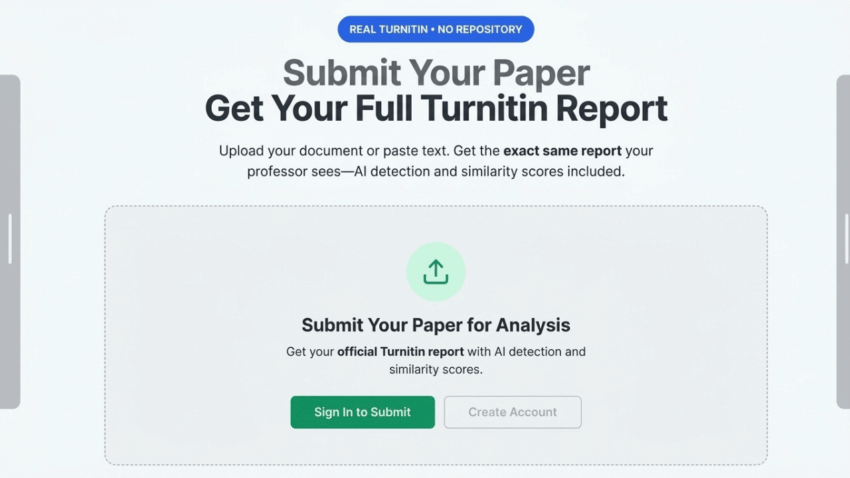
A Turnitin report checker used outside an official school submission generally works the same way the underlying technology does inside an institutional account, scanning uploaded text against a comparable database of existing sources and generating a similarity report with highlighted matches and percentage scores. Using one of these before an official submission gives a student the chance to review flagged sections, confirm that every match is properly cited, and revise anything that looks like an accidental oversight rather than discovering a problem only after the stakes are already fixed.
A Practical Way to Use This Before Submitting Anything
The most useful approach starts well before a deadline, running a completed draft through a checker with enough time left to actually revise based on what comes back, rather than checking the night before submission when there is no room to fix anything flagged. Reviewing every highlighted match individually, rather than fixating on the overall percentage, tends to reveal the real story behind a report. Some matches will be legitimate citations that need no attention at all. Others might reveal a forgotten quotation mark or a paraphrase that stayed too close to the original source’s wording. Addressing those specific issues, rather than trying to blindly lower a percentage number, produces a paper that is actually more original, not just one that looks better on a superficial score.
Why the Underlying Database Matters More Than People Realize
Not every Turnitin report checker draws from the exact same database that an institutional Turnitin account uses, and this is worth understanding clearly before relying on any particular result. Official Turnitin accounts often have access to a school’s own archive of previously submitted student papers, catching matches against student work that a general online database would never include. A checker used outside that institutional context might return a different, sometimes lower, similarity score simply because it is comparing against a narrower set of sources. This does not make an independent checker useless, but it does mean the result should be treated as a helpful early indicator rather than an exact preview of what an official institutional report will ultimately show.
Where the Real Value Sits for Students and Educators
For students, the honest value of checking a Turnitin report online before official submission is catching an honest mistake while there is still time to fix it, not gaming a system or trying to slip something questionable past a review process. A forgotten citation, a paraphrase that drifted too close to a source’s original wording, an accidentally duplicated section from an earlier draft, these are the kinds of issues a pre-submission check actually catches, and fixing them genuinely improves a paper’s integrity rather than just its appearance.
For educators and writers working outside a formal academic context, similar tools serve a related purpose, offering a way to confirm original work before it goes out to a client, a publisher, or a broader audience, particularly useful for anyone producing content at a volume where manually double checking every citation becomes impractical.
What to Keep in Mind Before Relying on Any Result
A similarity report, wherever it comes from, is a tool for review, not a final judgment on academic integrity. Multiple checkers, including ones drawing on different databases, may produce noticeably different scores for the exact same document, which is worth knowing before treating any single result as a definitive answer. It is also worth remembering that similarity checking and AI detection are related but distinct concerns, and a low similarity score says nothing about whether content was AI generated, just as a low AI detection score says nothing about whether proper citation practices were followed. Checking both, where that matters for a given submission, gives a far more complete picture than relying on either one alone.
Checking Your Work Before Someone Else Does
The appeal of accessing a Turnitin report online before an official submission is fundamentally about control, giving a student or writer the chance to catch and fix an honest issue on their own terms rather than discovering it after the fact when options for correction have already narrowed. Used this way, as an early check rather than a shortcut around doing the work properly, these tools support genuinely more careful, better cited writing rather than replacing the actual effort that originality requires in the first place.
