

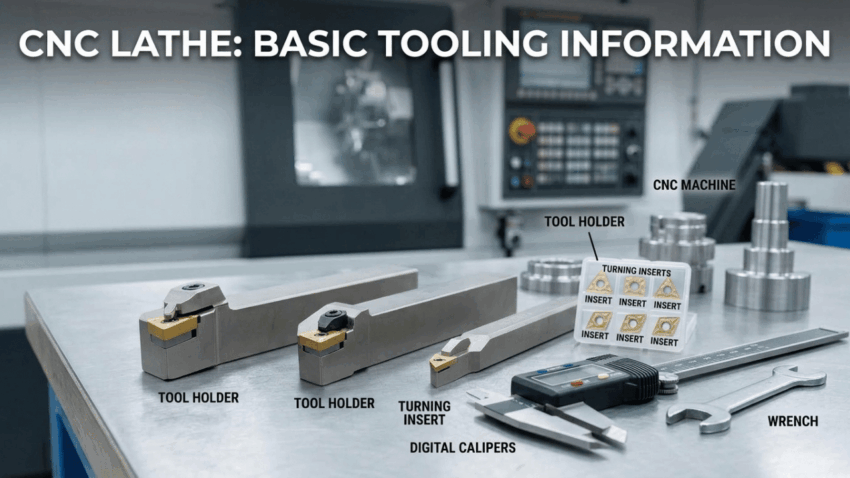
Starting with CNC lathe work can feel intimidating because turning involves a different way of thinking about cutting than milling. Instead of moving a cutter around a stationary workpiece, a lathe rotates the part while the cutting tool removes material. Once that basic idea becomes familiar, many turning operations become much easier to understand.
Beginners do not need a huge collection of specialty tools to start learning. A small group of dependable tools can handle many basic operations such as facing, turning outside diameters, cutting grooves, creating shoulders, and finishing parts to size. The goal is to understand what each tool does, how it should be positioned, and how the overall setup affects the finished part.
Learning the fundamentals of lathe tooling gives new machinists a stronger starting point for understanding CNC turning. The cutting insert, holder, workholding, machine setup, speeds, feeds, and inspection process all work together. A problem in any one of those areas can affect surface finish, dimensional accuracy, or tool life.
Beginners should focus first on reliable setups and repeatable habits rather than trying to run the fastest possible cycle. Once clean cuts and accurate dimensions become consistent, more advanced tooling and techniques can be added gradually.
Beginner Lathe Tools for Cleaner Cuts
One of the first tools a new lathe operator should understand is the general-purpose turning tool. This is commonly used to remove material from the outside diameter of a workpiece. It can reduce stock to a specified size, create shoulders, and help establish the basic profile of a turned part.
Facing tools are equally important. Facing removes material from the end of the workpiece to create a flat surface. This operation often establishes the starting reference for other dimensions, so an accurate face can make the rest of the machining process easier to control.
Insert selection matters because different geometries, grades, and coatings are designed for different materials and cutting conditions. A beginner does not need to memorize every insert option immediately. A better approach is to understand the basic relationship between the insert and the workpiece material.
Some inserts are designed for steel, while others may perform better in aluminum, stainless steel, or other materials. Choosing an insert that matches the application can improve chip control, surface finish, and tool life.
The cutting edge should also be inspected regularly. A worn or damaged insert can begin producing poor surface finishes, inconsistent diameters, or unusual cutting sounds. Replacing or indexing an insert before it fails can help prevent damage to both the part and the tool holder.
Parting and grooving tools are another useful category for beginners. Grooving tools can create narrow recesses or relief features, while parting tools can separate a finished component from the remaining stock. These operations can generate significant cutting forces, so tool alignment and rigidity are especially important.
Tool stickout should be kept as short as practical. Extending a tool too far from the holder can reduce rigidity and increase the chance of chatter. Chatter may appear as vibration, poor surface finish, unusual noise, or inconsistent dimensions.
Workholding plays an equally important role. The workpiece must remain secure throughout the turning operation. Chucks and collets are common options, and the correct choice depends on part geometry, production needs, and the amount of material being removed.
Beginners should confirm that the workpiece is seated properly and that enough material is being held securely. A part that extends too far from the chuck without adequate support may flex or vibrate during machining.
Longer workpieces may require additional support, depending on the application. The key lesson is that cutting-tool performance depends heavily on how rigidly the material is held.
Tool offsets also deserve attention. The CNC control needs accurate information about the position of each tool. Incorrect offsets can cause a tool to cut too deeply, miss the intended diameter, or create a collision risk.
Before running a program, machinists should confirm the correct tool is loaded, the offset matches the tool, and the programmed path makes sense. Slower test runs or cautious first-piece setups can help beginners verify the process before committing to full production.
Simple Tool Choices That Improve Turning Results
Successful turning is not only about the tool touching the material. Setup choices made before the cycle begins can have just as much influence on the final result.
Speeds and feeds are one of the first areas beginners should learn. Cutting too slowly can cause rubbing instead of efficient cutting, while running too aggressively can create excessive heat, tool wear, or poor chip control. Starting with recommended values for the insert and workpiece material provides a more reliable baseline.
Chip formation can give useful clues about what is happening during the cut. Ideally, chips should leave the cutting area without wrapping excessively around the workpiece or tool. Poor chip control can interfere with machining and make inspection more difficult.
Coolant can also help control heat and clear chips from the cutting zone. The exact coolant strategy depends on the operation and tooling, but beginners should understand that heat management is an important part of tool life and surface quality.
Some CNC shops use both turning and milling equipment, so new machinists may also encounter tools such as end mills when working around machining centers or more advanced lathe setups. Understanding the difference between turning tools and rotating milling cutters helps beginners recognize which cutting strategy fits a particular feature.
Lathe work generally relies on a stationary cutting edge while the part rotates. Milling tools rotate and remove material from a stationary or controlled workpiece. Knowing the difference makes it easier to understand why tool geometry and cutting parameters vary between the two processes.
Inspection should be part of every beginner’s turning routine. Even when the CNC program is correct, tool wear, workholding movement, incorrect offsets, or material variation can affect the finished dimension.
After the first machining operation, operators should check important features before producing additional parts. This is especially important when the job includes tight tolerances.
A set of dial calipers can provide a convenient way to check outside diameters, lengths, steps, and other common features. Calipers are useful for quick inspection, although tighter tolerances may require a micrometer or another more precise measuring tool.
Good measuring technique matters. Chips and coolant should be removed from the part before inspection, and the measuring surfaces should be clean. Using consistent pressure helps produce more repeatable readings.
Beginners should also compare measurements against the print rather than relying only on what the CNC control displays. The machine may be programmed to cut a specific diameter, but the finished part still needs to be verified.
If the first part measures incorrectly, the next step should be troubleshooting rather than immediately running another cycle. Check the tool offset, insert condition, workholding, programmed dimension, and cutting conditions. Small corrections made early can prevent an entire batch of incorrect parts.
Keeping notes can make the learning process faster. Recording which tool was used, the insert type, material, cutting parameters, and final measurements provides useful information for future jobs. Over time, these notes can help machinists recognize which setups consistently produce good results.
New operators should also pay attention to sound and feel. A stable cut often has a consistent sound, while sudden squealing, vibration, or changes in chip formation may indicate that something needs attention.
Learning CNC lathe work becomes much easier when beginners focus on a few core principles: choose appropriate cutting tools, keep setups rigid, use sensible speeds and feeds, and inspect the first part carefully.
The most important early goal is consistency. A beginner who can repeatedly produce a clean, accurate part with a simple turning tool has built a stronger foundation than someone who owns many specialized tools but does not yet understand setup basics.
As experience grows, more advanced tools such as threading inserts, boring bars, specialized grooving tools, and additional workholding options can be added. Each new tool becomes easier to understand because it builds on the same basic concepts of rigidity, cutting geometry, tool position, and inspection.
CNC turning is ultimately a process of controlled material removal. By starting with dependable tooling, keeping the setup stable, and measuring parts throughout the job, new machinists can improve accuracy while avoiding many common beginner mistakes.
Strong fundamentals make later projects easier. Once facing, basic turning, grooving, tool offsets, workholding, and inspection become routine, more complicated lathe work begins to feel much more approachable.
