

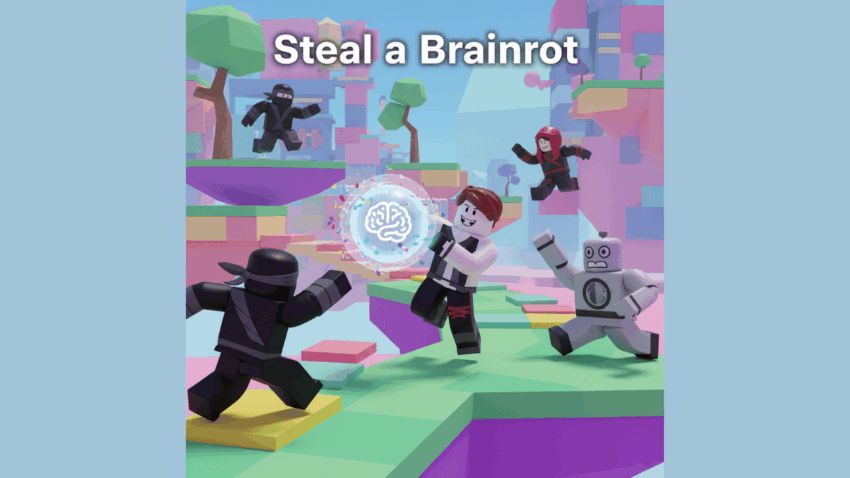
Steal a Brainrot is a Roblox game, but it’s definitely not “just another Roblox game.” If you’ve spent even a few minutes in it, you know it has that weird mix of chaos, humor, and low-key strategy that somehow keeps you saying, “Okay, one more round,” until half an hour disappears.
But what exactly makes Steal a Brainrot work under the hood? Why does the gameplay feel so different from typical Roblox experiences? And what clever design choices make its loop—stealing, chasing, escaping, trolling, and buying upgrades—feel addictive without being stressful?
After digging into the game’s systems, observing how players behave, and comparing it to other Roblox titles, I think the answers come down to a handful of smart mechanics and tech choices that make the game surprisingly polished for such a goofy concept.
Let’s break it down piece by piece, with a focus on how the game systems actually work and why they matter for players.
- A Simple Core Loop That Uses Tech to Stay Fast and Responsive
At the heart of Steal a Brainrot is a very simple loop:
- Find a target
- Steal their brainrot
- Run for your life
- Repeat until chaos inevitably erupts
That’s practically it. But the tech behind how this loop is delivered is what gives the game its signature “chaotic but smooth” feel.
Server-side detection keeps stealing snappy
The game relies heavily on server-side hit detection and proximity triggers instead of client-based calculations. This matters more than people think. By keeping the “brainrot stealing” check on the server:
- inputs feel fair
- laggy players can’t easily exploit it
- chases are tense but predictable
You know when someone is about to grab your brainrot because the game doesn’t desync the steal animation.
Lightweight animations = fast reactions
The game uses short, low-weight animation assets. This means:
- no long “steal wind-up”
- instant steal feedback
- smooth looping between run animations
That’s basically Roblox game optimization 101, but Steal a Brainrot applies it better than most humor-based games that drown themselves in particle spam.
The world design loads fast even on low-end devices
Roblox has to survive phones, tablets, and anything with a half-functioning GPU.
The game uses:
- low-poly environments
- minimal textures
- preloaded animations
This ensures players jump right in without watching their device melt.
Bottom line: The tech doesn’t call attention to itself, but it makes the experience smoother than it has any right to be.
- “Brainrots” Work Like Lightweight Power-Ups — and That’s Why They’re Fun
You’ve probably noticed how players love collecting different brainrots or even buy brainrots cheap from U4GM. The reason is simple: in Steal a Brainrot, brainrots basically act like mini power-ups mixed with vanity items.
Visual flair + gameplay advantage
Most brainrots give your character a style change (wacky head, glowing effect, weird cosmetic animation), but some also influence:
- hit radius visibility
- target detectability
- chase pressure
These aren’t big stat boosts. They’re subtle enough that new players don’t feel bullied, but meaningful enough that you feel rewarded.
The Store UI is surprisingly polished
The Steal a Brainrot store has a very clean, mobile-friendly layout:
- scrolling lists
- tap-to-preview effects
- instant equip
- clear buy buttons
It’s not overloaded with tiny text or confusing submenus. Even younger players can navigate it without issues.
I’d even say it’s better organized than some AAA game item stores—which is wild for a Roblox title built around memes.
Everything is tuned for short play sessions
Brainrots don’t require grinding or hard quests. You can earn them casually, or buy them if you just want a shortcut.
This is smart for a player base that might be:
- hopping in between homework
- playing on a bus ride
- swapping between multiple Roblox games
Small upgrades = high replay value without stress.
- Movement and Chasing Are Built Around Roblox Engine Strengths
A lot of Roblox games attempt complex movement systems and end up fighting the engine. Steal a Brainrot avoids that mistake entirely.
Instead, it leans into what Roblox does well.
Short acceleration = instant chase energy
Your character accelerates very quickly. This creates that moment of “GO GO GO” energy every time someone starts chasing you.
Predictable turn radius
Unlike many Roblox games that overload movement scripts, turning in Steal a Brainrot is:
- responsive
- consistent
- readable
This is huge for kids who are still learning spatial control in games. You don’t need advanced movement skills to enjoy yourself—you just need to run smart.
Minimal obstacles reduce frustration
The maps are laid out with wide lanes and clear paths.
This keeps gameplay from turning into “I lost because I got stuck on a chair,” which is a common issue in smaller indie Roblox experiences.
Player markers use efficient UI billboards
Chasing feels good because:
- you can track your target
- the UI doesn’t lag
- markers pop in/out quickly
It’s small stuff, but it makes the loop silky smooth.
- Humor + Tension: The Social Mechanics Carry Half the Game
Technology alone doesn’t make Steal a Brainrot popular. A lot of the secret sauce comes from how the game uses social design.
Visibility mechanics = instant comedy
Seeing someone’s giant, goofy brainrot bouncing across the map is half the fun.
The game wants players to:
- chase each other
- troll each other
- show off brainrots
- create spontaneous chaos
This is Roblox’s biggest strength as a platform: shared silliness.
Stealing is competitive but not mean-spirited
The game never punishes you too harshly.
Lose your brainrot? Steal it back.
Lose a chase? Try again.
This low-stress loop encourages younger players who might get frustrated in more punishing games.
Player density is tuned for constant interaction
Maps are small enough that:
- you always see another player
- chases happen frequently
- the world never feels empty
It’s tight, intentional design.
- Audio and Visual Feedback Make Every Action Satisfying
Even though the game is simple, it pays a lot of attention to sensory feedback.
Sound cues matter more than you think
The moment a brainrot gets stolen, you hear:
- a quick “grab” sound
- your character’s panic voice line
- sometimes a comedic effect
These aren’t random—they’re psychological cues that tell you:
“Something just happened. React now.”
Bright, clear FX keep things readable
Effects are cartoonish and bold:
- glowing outlines
- exaggerated head icons
- clear color contrast
This keeps the game comfortable even for new or younger players who aren’t used to fast-paced titles.
- Why These Mechanics Actually Matter for Players
All the design choices above solve real-world problems Roblox players deal with daily:
For younger players:
- easy controls
- clear visuals
- low frustration
- fast response feedback
For casual players:
- short matches
- instant rewards
- smooth chases
For tech-savvy players:
- optimized performance
- clean netcode
- responsive movement
For collectors/completionists:
- tons of brainrots to unlock
- a well-organized store
- frequent updates
This is why the game sticks around—no single mechanic is complex, but together they create a loop that hooks a broad audience.
- So What Makes Steal a Brainrot Truly Unique?
If I had to sum it up:
It uses simple tech intelligently to create gameplay that feels fast, funny, and endlessly repeatable.
It’s a mix of:
- clean networked interactions
- polished UI
- smart movement tuning
- low-lag effects
- rewarding brainrot progression
- constant social tension
- playful chaos
And it all runs smoothly even on low-end devices—which is huge for a Roblox game.
The game knows what it is, and leans into it fully.
Summary
Steal a Brainrot might look like a lightweight meme game at first glance, but the tech design behind it is surprisingly thoughtful. Everything—movement, UI, audio cues, store navigation, brainrot upgrades—is shaped around making the game fast, chaotic, and accessible to absolutely everyone.
It’s a reminder that a game doesn’t need complex systems to be fun.
Sometimes all you need is:
- smooth mechanics
- a clean loop
- silly social interactions
- and a bunch of weird brainrots to steal
If you’re looking for a Roblox game that blends tech efficiency with pure comedic energy, this one absolutely nails it.
