

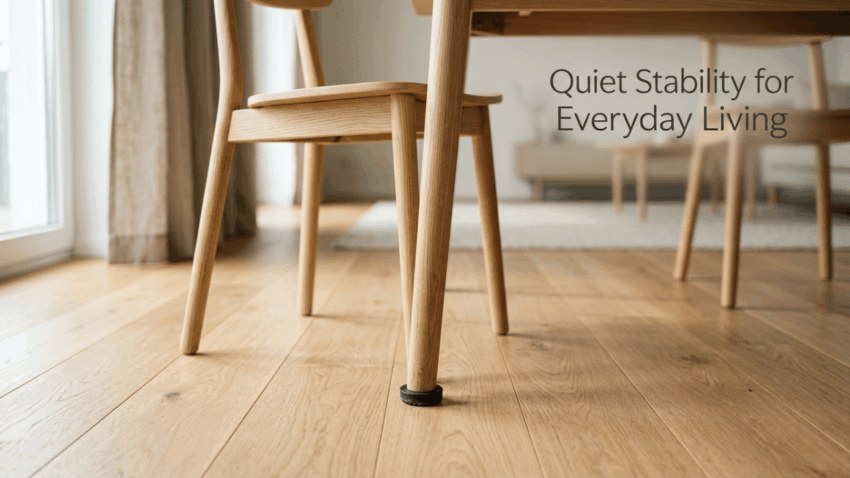
It usually starts with a sound. Not loud. Just… there. A chair scraping slightly when you pull it out. A table shifts a few millimetres every time someone leans on it. That faint vibration from a washing machine that travels further than it should.
You don’t react straight away. You just live with it. At first, it’s nothing. You drag the chair back in. Adjust the table leg with your foot. Ignore the slight movement under your desk when you type a bit too hard. Normal stuff.
But over time, those small things build up. Not dramatically. Just enough to become part of your everyday awareness. That’s usually where rubber feet come in. Not as a big upgrade. More like a quiet correction.
You Don’t Look Under Furniture Until You Have To
Most people don’t flip chairs or tables over unless something’s wrong. Or lose. Or making noise. Underneath is out of sight. Easy to ignore. But that’s where rubber feet sit. Doing their job quietly. Or, if they’re missing… not doing it at all.
And suddenly, the floor starts telling the story instead. Scratches. Marks. Slight wear patterns that weren’t there before.
A Table That Moves More Than It Should
There’s always one. A table that looks stable but isn’t. You lean on it slightly, and it responds. Not enough to fall. Just enough to feel… off. You try adjusting it. Maybe slide a piece of paper under one leg. That temporary fix. It works. For a bit.
But it’s not really solving the problem. Rubber Feet tend to fix that properly. Not by forcing stability, but by absorbing the imbalance in a way that feels natural.
Floors Take the Hit First
Especially timber floors. They show everything. Every drag, every shift, every tiny movement repeated over weeks and months.
And the thing is, most of that damage doesn’t come from big events. It comes from daily use. Small movements, over and over again.
Rubber feet act like a buffer. Between furniture and floor. Between movement and damage. You don’t notice them working. But you definitely notice when they’re not there.
Noise Changes Without You Realising
This part is easy to miss. You install rubber feet, or replace worn ones, and suddenly the space feels quieter. Not silent. Just… softer.
Chairs don’t scrape the same way. Tables don’t echo movement into the floor. Appliances feel less aggressive when they run.
It’s not dramatic. But it changes how a room feels.
The Kitchen Is Usually the First Place You Notice
Chairs moving in and out constantly. Heavy use. Repetition. Without rubber feet, the sound builds. That scraping noise becomes part of the background.
You stop reacting to it, but it’s still there. Then one day, it’s gone. Or reduced enough that you notice the difference. That’s when you realise how much those small details matter.
It’s Not Just About Furniture
Appliances too. Washing machines. Small fridges. Even speakers sometimes. Anything that vibrates slightly transfers that movement into the floor.
And floors respond. With noise. With subtle shifts. Rubber feet absorb that energy. Break the connection just enough.
It’s a small change. But it stabilises things more than you’d expect.
The Worn-Out Ones Are Easy to Ignore
Until they’re not. Rubber feet don’t last forever. They flatten. Harden. Sometimes fall off completely without you noticing.
And because the change is gradual, you don’t immediately connect the dots. The chair starts scraping again. The table feels less stable. The noise creeps back.
You think something bigger is wrong. Often, it’s just the rubber feet that need replacing.
A Quick Fix That Feels Bigger Than It Is
Installing them doesn’t take long. A few minutes per piece of furniture. Sometimes less. But the effect spreads across the whole space.
Things feel steadier. Quieter. More controlled. It’s one of those fixes that feels disproportionate to the effort involved. Small action. Noticeable result.
Offices Notice It Differently
In a workspace, the impact shows up in other ways. Less noise during movement. Fewer interruptions. A more stable feel overall. Chairs rolling, desks shifting, equipment vibrating slightly.
Rubber feet reduce all of that just enough to make the environment feel more focused. You don’t point to it directly. But it’s there.
Cafés and Busy Spaces Rely on It More Than You Think
High traffic. Constant movement. Chairs in, out, in, out again. Tables adjusted between customers. Without rubber feet, the sound alone becomes overwhelming.
And floors wear down faster than expected. That’s why these places often prioritise them. Not as an afterthought. As part of the daily function.
You Only Notice After It’s Fixed
That’s the pattern. Before, things felt slightly off. No clear reason. After, everything feels smoother.
You don’t think, “This is because of rubber feet.” You just feel the difference. Less friction. Less noise. More stability.
There’s Something About Stability That Feels Better
Even if you can’t explain it. A table that doesn’t move. A chair that sits evenly. An appliance that doesn’t vibrate across the floor. It changes how you interact with the space.
More relaxed. Less cautious. Rubber feet create that without drawing attention to themselves.
The Part Most People Skip
Checking regularly. It’s not something people schedule. But every now and then, flipping a chair or table and taking a quick look… it makes a difference.
Because once rubber feet wear out, everything else starts compensating. The floor. The furniture. Even how you move things.
A Small Detail That Stays Invisible
That’s probably the most interesting part. Rubber feet from Concept Fasteners do their job best when you forget they’re there. No noise. No movement. No damage is building up over time.
Just… things working the way they should. Quietly. And honestly, that’s what makes them worth paying attention to in the first place.
