

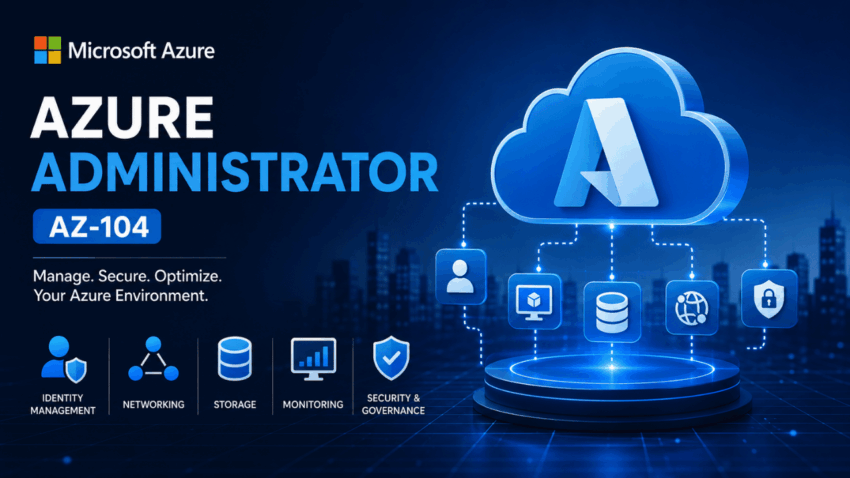
Cloud computing has become the foundation of modern IT infrastructure, and Microsoft Azure is one of the world’s leading cloud platforms. Organizations rely on Azure to host applications, manage databases, secure business data, and support remote workforces. As cloud adoption continues to expand, there is an increasing demand for professionals who can effectively manage Azure environments.
The Microsoft Azure Administrator (AZ-104) certification is designed for IT professionals responsible for implementing, monitoring, and maintaining Microsoft Azure solutions. It validates practical skills in identity management, networking, storage, virtual machines, governance, monitoring, and business continuity.
Whether you are a system administrator, cloud engineer, or IT professional looking to advance your career, AZ-104 provides the knowledge needed to manage enterprise Azure environments with confidence.
What Is the AZ-104 Certification?
The AZ-104 certification is a role-based Microsoft credential that focuses on Azure administration. Unlike introductory certifications, AZ-104 emphasizes hands-on management of Azure resources and real-world administrative tasks.
Candidates learn how to:
- Manage Azure identities
- Configure virtual networks
- Deploy virtual machines
- Manage Azure storage
- Monitor cloud resources
- Implement backup and recovery
- Configure governance and security
- Maintain Azure subscriptions
The certification demonstrates that professionals possess the practical skills required to administer Microsoft Azure environments.
Why Earn the AZ-104 Certification?
Cloud administrators play a critical role in helping organizations operate secure and reliable cloud infrastructure.
Benefits of earning AZ-104 include:
- Industry-recognized Microsoft certification
- Increased cloud administration knowledge
- Better career opportunities
- Practical Azure management experience
- Strong foundation for advanced Azure certifications
- Improved confidence in enterprise cloud operations
Many organizations actively seek professionals with Azure administration expertise because cloud environments continue to expand.
Understanding Azure Identity Management
Identity management is one of the most important responsibilities of an Azure Administrator.
Key identity services include:
- Microsoft Entra ID
- User and group management
- Multi-Factor Authentication
- Conditional Access
- Role-Based Access Control (RBAC)
- Administrative roles
Proper identity management protects organizational resources while allowing authorized users to work efficiently.
Azure Resource Management
Azure Resource Manager (ARM) provides centralized management for Azure resources.
Administrators use ARM to:
- Create resource groups
- Organize resources
- Apply tags
- Deploy templates
- Configure resource locks
- Manage subscriptions
Using Resource Manager helps organizations maintain consistency across cloud environments.
Azure Storage Services
Microsoft Azure offers multiple storage solutions designed for different business requirements.
Important storage services include:
- Blob Storage
- Azure Files
- Queue Storage
- Table Storage
- Managed Disks
Choosing the correct storage option improves both performance and cost efficiency.
Virtual Machines
Virtual Machines remain one of Azure’s most commonly used services.
Azure administrators are responsible for:
- Creating virtual machines
- Configuring operating systems
- Managing disks
- Monitoring performance
- Applying updates
- Configuring availability options
Understanding virtual machine administration is essential for successfully managing enterprise workloads.
Azure Networking
Networking enables communication between Azure resources and external environments.
Major networking topics include:
- Virtual Networks (VNets)
- Subnets
- Network Security Groups
- Azure Load Balancer
- VPN Gateway
- Azure DNS
A properly designed network improves both performance and security.
Monitoring Azure Resources
Monitoring allows administrators to identify and resolve issues before they affect business operations.
Azure monitoring tools include:
- Azure Monitor
- Log Analytics
- Activity Logs
- Alerts
- Metrics
- Dashboards
Continuous monitoring helps maintain healthy and reliable cloud environments.
Backup and Disaster Recovery
Business continuity is an important responsibility for Azure administrators.
Azure provides several backup solutions, including:
- Azure Backup
- Azure Site Recovery
- Recovery Services Vault
- Geo-redundant storage
These services help organizations recover quickly from hardware failures, accidental deletions, or unexpected disasters.
Governance and Compliance
Cloud governance helps organizations maintain security and operational standards.
Azure governance tools include:
- Azure Policy
- Management Groups
- Resource Tags
- Resource Locks
These services ensure cloud resources remain compliant with organizational policies.
Best Study Strategy for AZ-104
Preparing for AZ-104 requires both theoretical understanding and practical experience.
A recommended study plan includes:
Week 1
Learn Azure fundamentals and identity management.
Week 2
Study storage accounts, virtual machines, and resource management.
Week 3
Focus on networking, virtual networks, VPNs, and DNS.
Week 4
Practice monitoring, backup, disaster recovery, and governance.
Week 5
Review all objectives and complete hands-on exercises.
Week 6
Take several practice exams and review any weak areas.
Working through realistic lab exercises alongside reviewing practice questions can help reinforce concepts and identify topics that need additional study. The goal is to understand why each answer is correct rather than simply memorizing responses.
Practical Skills Matter
Success in Azure administration depends on practical experience.
Candidates should spend time:
- Creating virtual machines
- Configuring virtual networks
- Deploying storage accounts
- Assigning RBAC roles
- Creating backup policies
- Monitoring Azure resources
- Managing subscriptions
Hands-on practice develops the confidence needed for real-world cloud administration.
Career Opportunities After AZ-104
The AZ-104 certification prepares professionals for numerous cloud-related careers.
Popular roles include:
- Azure Administrator
- Cloud Administrator
- Systems Administrator
- Infrastructure Engineer
- Cloud Operations Engineer
- Technical Consultant
- IT Support Engineer
The certification also provides an excellent foundation for advanced Microsoft certifications such as AZ-305, AZ-500, and AZ-400.
Common Preparation Mistakes
Many candidates make avoidable mistakes while preparing.
Common examples include:
- Memorizing answers instead of understanding concepts
- Ignoring hands-on Azure practice
- Spending too little time on networking
- Overlooking monitoring and governance
- Not reviewing Microsoft documentation
A balanced study approach that combines reading, labs, and practice questions generally leads to much stronger long-term understanding.
Frequently Asked Questions (FAQs)
What is the AZ-104 certification?
AZ-104 is Microsoft’s Azure Administrator certification that validates the skills required to manage Azure identities, storage, networking, virtual machines, monitoring, and governance.
Who should take AZ-104?
It is ideal for Azure administrators, systems administrators, cloud engineers, and IT professionals responsible for managing Microsoft Azure environments.
Is hands-on Azure experience important?
Yes. Practical experience significantly improves understanding and prepares candidates for real-world administrative responsibilities.
How should I prepare for the exam?
Use official learning resources, practice Azure in a test environment, review documentation, and answer practice questions to strengthen your understanding of the exam objectives.
Can AZ-104 improve career opportunities?
Yes. Azure administrators remain in high demand as organizations continue migrating workloads to Microsoft Azure.
What certification should I pursue after AZ-104?
Many professionals continue with AZ-305 (Azure Solutions Architect), AZ-500 (Azure Security Engineer), or AZ-400 (Azure DevOps Engineer), depending on their career goals.
Conclusion
The Microsoft Azure Administrator (AZ-104) certification is one of the most valuable credentials for professionals pursuing a career in cloud computing. It provides practical knowledge of Azure identity management, networking, storage, virtual machines, monitoring, governance, and disaster recovery. By combining structured learning, hands-on practice, and thoughtful review of practice questions, candidates can develop the skills needed to confidently manage Microsoft Azure environments. As organizations continue expanding their cloud infrastructure, AZ-104-certified professionals will remain well positioned for rewarding careers in cloud administration and IT operations.
