

Selecting an air purifier can be a confusing task when product pages are filled with broad claims and technical jargon. Which model is right for you depends on where you want to use it, what you want it to filter and how much time and money you’re willing to spend on upkeep.
Some practical checks can help make the choice easier. Before you purchase, research replacement-filter costs, compare room coverage and clean-air delivery rate, and know the filter stages. These details can help you choose a purifier that will fit your space and can be used easily every day.
Choose the Right Air Purifier for Your Room Size
First, measure the room you intend to use the purifier in. A small unit might be enough for a bedroom or home office but a larger capacity unit might be necessary for a bigger living room. Also contributing to how well air moves in a room are open floor plans, high ceilings and connected spaces.
Many of our product listings include a recommended room size. Begin with that number, then locate the unit’s clean air delivery rate, or CADR. CADR is a measurement of how quickly an air cleaner filters the air. If you have a larger space, or you want the air in your room filtered more quickly, a higher rating may help.
Also, consider how the room will be used. A purifier in a busy family room may need to be used for longer periods than in a guest room. If you plan to move the unit from one room to another, check the size, weight and handle design before you decide.
Know What Each Filter Is Supposed to Do
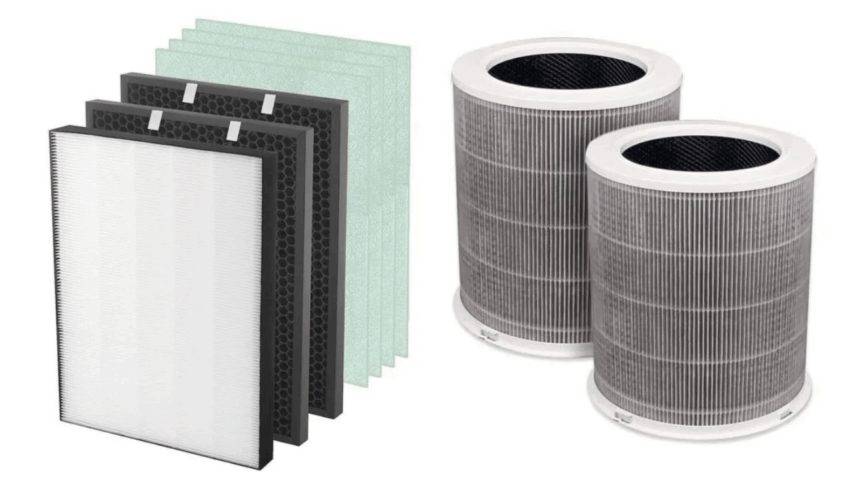
Air purifiers often have several filter stages. A pre-filter can catch larger particles like hair and lint and help protect the main filter. A high-efficiency particle filter is designed to capture smaller airborne particles as the air flows through it. Some models use activated carbon, which can help to reduce some odors and gasses.
Filters of many types are used for many purposes. A particle filter is not an odor-control filter and terms such as “multi-stage filtration” do not explain exactly what a device can do. Check the product specifications to see what each layer is supposed to capture and if the manufacturer provides details on the filter materials.
If you come across a product page that uses terms like “HEPA-type” or “high-efficiency,” be sure to dig for clear documentation on how the filter is rated and how well it performs. It is better to compare the actual information rather than rely on the label alone.
Replacement Filter Prices to Compare Before You Buy
The first cost is a fraction of the total cost. Most purifiers require replacement filters, so before you decide on a model, check the price, availability and the recommended replacement interval. A cheaper unit can also have expensive replacement parts, and another model might cost more upfront but be cheaper to maintain.
Filter life depends on usage and indoor conditions. A purifier that is used for many hours every day may need more frequent attention than one that is only used on occasion. Look at the manufacturer’s care instructions to determine whether the filter-life indicator is based on time, conditions, or some other method.
Additionally, it is helpful to know how to easily identify the correct filter for air purifiers. Please ensure that the filter you choose is a perfect match for the specific model and version of your air purifier. Products that look similar may still differ in terms of filter dimensions or design. Explore our range of air purifier filters to see the various options available.
Noise Levels and Energy Consumption: Comparison
The best purifier is one that fits seamlessly into your routine. Noise can be a critical consideration if you plan to use the unit in a bedroom, nursery or home office. Look at the noise information for multiple fan settings . Maybe the quietest setting is fine for resting but a higher setting is louder .
Energy use is important if the purifier will be running for much of the day. Read the power information of the product and determine if it has timer or auto mode of operation. These are features that can make for more convenient day-to-day use, but they shouldn’t replace a careful comparison of room coverage, filtration and maintenance costs.
Don’t forget controls. Purifiers with clear buttons, easily accessible settings and a simple process to change the filter are easier to maintain over time.
Pick a good place for your air purifier
The purifier needs a flow of air in order for the filters to do their job. Follow the manufacturer’s guidance for placement and leave sufficient space around the air intake and outlet. Do not place the unit behind furniture, or where curtains or other objects may block airflow.
A central position can work in some rooms but the optimum position will depend on the unit and the way the room is laid out. If you plan to use a purifier in more than one room, be aware that it may not distribute the filtered air evenly through the whole house. You might find more practical use by putting it in the room where people spend the most time.
Air flow can also be affected by doors, windows and ventilation. Consider how the air will move through your space when deciding where to put the unit and keep the intake clear during normal use.
Find Features that are Useful, not just Extra
Some models have an air-quality display, automatic fan adjustment, timer, child lock or filter-change reminder. These features can be helpful, but their worth really depends on how you intend to use the purifier.
For example, if you don’t want to manually adjust the fan, you might find an automatic mode convenient. If you want the purifier to run only part of the day, a timer can help. A filter reminder can make maintenance easier, but you should still follow the manufacturer’s instructions.
Check the essentials – room suitability, CADR, filter design, replacement costs and noise – and then compare these features. That order keeps the decision on the performance and long term value.
Realistic Indoor Air Cleaning Expectations
An air purifier cleans the particles in the air that go in through its intake. It does not replace normal cleaning or good ventilation and cannot remove material that has already settled on floors, furniture or fabrics. Dusting, vacuuming and other routine cleaning are still part of maintaining a comfortable home.
A purifier’s results depend on several factors, like room size, filter condition, operating speed and how consistently the unit is used. Also it’s important to choose a purifier based on the particular concern you want to address. A general particle filtration model may not be built to address all odor or indoor air issues.
This Guide to Buying an Air Purifier
Before you purchase, be sure that the purifier is right for the room you intend to use it in. Compare its CADR and see what area it’s recommended for. Make sure you know what each filter stage is designed to do and if you can get replacement filters at a reasonable price.
Then think about noise levels at the settings you plan to use, power consumption, placement, and any features that would make daily operation easier. Examining these details across a few models can help you avoid purchasing a purifier based only on one attractive claim or low initial price.
For more information on filtration products and solutions, please visit HIFINE Filter.
