
We all have that one “ghost” living in our pockets. It hides in the Notes app of our smartphones, buried under grocery lists and reminders. It lives in the margins of old journals or the sudden bursts of inspiration that hit us during a rainy commute.
These are your lyrics. They are raw, emotional, and undeniably human. But for years, they have remained silent.
Why? Because the chasm between writing a song and hearing a song has always been too wide to jump. To cross it, you needed to master the piano, learn the complex mathematics of music theory, or pay a producer thousands of dollars to interpret your vision. So, your words stay on the page, flat and lifeless.
But what if that chasm didn’t exist? What if the distance between a scribbled thought and a fully produced, radio-ready track was measured not in years of practice, but in seconds of processing?
This is where the narrative changes. This is where AI Song enters the stage, not just as a tool, but as a digital alchemist that turns the lead of your text into the gold of audio.
A First-Hand Encounter: My Journey from Text to Track
I need to be honest with you. When I first heard about “text-to-audio” technology, I was skeptical. As someone who respects the grit of traditional songwriting, the idea of an algorithm composing music felt cold, perhaps even robotic.
But curiosity got the better of me. I logged onto the platform to test its limits.
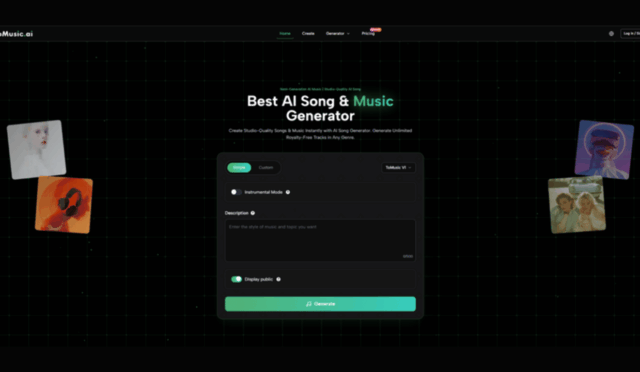
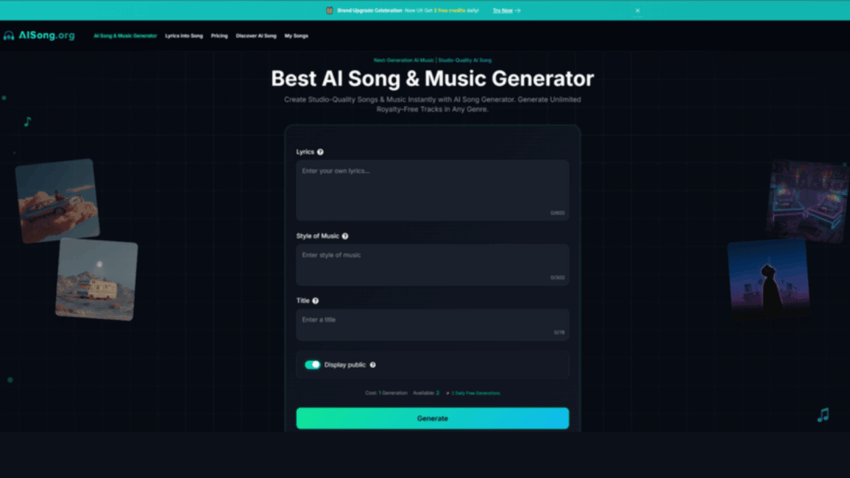
I pulled up a poem I had written years ago—a melancholic piece about a winter breakup that I never had the musical skill to finish. I pasted the text into the input field. I didn’t want a generic pop song; I wanted something that felt like a smoky lounge at 2 AM. I selected the “Jazz & Blues” filter.
I hit generate.
The wait wasn’t long—barely enough time to take a sip of coffee—but the result was startling. The AI didn’t just “read” my lyrics; it seemed to understand them. The piano intro was somber, the rhythm brushed lightly against the snare, and the vocal synthesis carried a weight that matched the sorrow of my words.
It wasn’t just a file; it was a feeling. In that moment, I realized the gatekeepers were gone. The orchestra wasn’t locked behind a golden gate anymore; it was waiting in the cloud, ready to follow my command.
The Engine of Imagination: How It Works
To understand why this is revolutionary, we have to stop thinking of it as a “jukebox.” A jukebox plays what already exists. AI Song is a generative engine; it builds what could exist.
It functions like a translator for your soul. Here is the breakdown of the alchemy:
1. The Lyrical DNA
It starts with your input. You don’t need to format it perfectly. Whether it is a polished chorus, a fragmented thought, or a stream-of-consciousness narrative, the engine analyzes the semantic weight of your words. It understands that words like “glory” and “thunder” demand a different sonic energy than “whisper” and “shadow.”
2. The Stylistic Prism
This is where you become the director. The platform offers a lens through which your lyrics are viewed.
- Pop & EDM: For when you want high-energy, infectious anthems that make people move.
- Metal & Rock: For raw, aggressive expression that screams your emotions.
- Jazz & Soul: For storytelling that requires nuance and breath.
3. The Alchemical Reaction
This is the “black box” moment. The AI weaves melody, harmony, rhythm, and vocal synthesis into a cohesive track. It is the musical equivalent of 3D printing—turning a digital blueprint into a tangible reality.
The Great Divide: Traditional Studio vs. The New Era
To truly appreciate the power of this technology, we must contrast it with the “old world” of music production. The friction of the past has been replaced by the fluidity of the present.
Below is a comparison of the resources required to create a single demo track:
| Feature | Traditional Studio Production | AI Song (The New Standard) |
| The Skill Barrier | Requires years of theory, instrument mastery, and mixing knowledge. | Zero technical skills. If you can type, you can compose. |
| The Timeline | Weeks of recording, arranging, mixing, and mastering. | Minutes. From concept to audio in the blink of an eye. |
| The Cost | Hundreds to thousands of dollars per track (Studio time + Engineers). | Free Daily Credits. A risk-free playground for creativity. |
| The Output | Static and difficult to change once recorded. | Fluid. Don’t like the vibe? Regenerate it instantly. |
| The Ownership | Complex licensing deals, often splitting royalties with producers. | 100% Ownership. You own the commercial rights to your creation. |
Breaking the “Fear of Cost” Barrier
One of the biggest inhibitors of creativity is financial anxiety. The thought, “What if I pay for this and it turns out bad?” kills experimentation before it even begins.
This platform eliminates that fear through a unique Daily Rewards System.
Perpetual Fuel for Creativity
Instead of forcing you to pull out a credit card for every experiment, the system grants you free credits simply for logging in each day. This changes the psychology of creation. It transforms music production from a “luxury purchase” into a “daily habit.”
You can experiment with weird genres, write funny lyrics for a friend’s birthday, or try to create an avant-garde masterpiece without spending a dime. It encourages you to show up, push buttons, and see what happens.
Ownership in the Digital Wild West
We live in an era where a single copyright strike can destroy a creator’s career overnight. If you are a YouTuber, a podcaster, or a social media influencer, you know the terror of using background music.
Many AI tools operate in a gray area, leaving users unsure if they actually own the content they generate. This is where AISong draws a line in the sand.
Clarity in Chaos
When you generate a track here, you possess the commercial rights. This opens up a new economy for your creativity:
- Monetize on YouTube: Use your songs as background music without fear of demonetization.
- Stream on Spotify: Upload your creations as an independent artist.
- Brand Your Business: Create custom jingles and audio logos that belong solely to you, avoiding generic stock music.
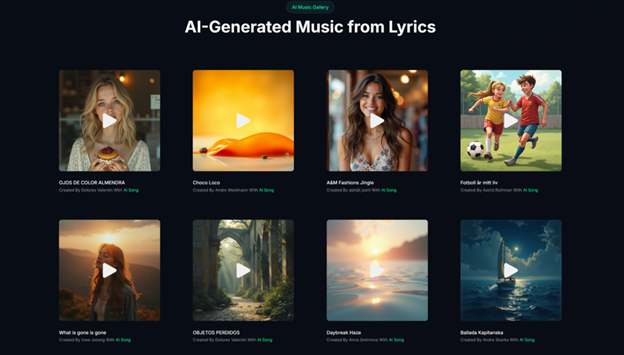
Who Is This For? (It’s Not Just Musicians)
You might be thinking, “But I’m not a musician.” That is exactly the point. This tool wasn’t built for the people who already have a studio; it was built for the rest of us.
1. The Storytellers and Poets
Your poetry no longer has to stay on the page. Give your stanzas a heartbeat. Let your rhymes ride a rhythm.
2. The Content Creators
Stop searching for “royalty-free music” that sounds like elevator noise. Create a custom soundtrack that perfectly matches the mood of your video.
3. The Dreamers
For anyone who has ever hummed a melody in the shower and wished they could capture it.
Conclusion: Your Orchestra Awaits
The history of technology is the history of democratization. The camera gave everyone the power to capture visual history. The internet gave everyone a printing press. Now, artificial intelligence is handing you the baton to your own orchestra.
The walls of the music industry have crumbled. The expensive studios, the complex theory, the gatekeepers—they are no longer necessary to express the song in your heart.
You have the lyrics. You have the emotion. The only thing missing was the bridge.
Don’t let your best songs remain silent in your notes app. Step into the new age of creativity. The microphone is on, and the world is ready to listen.
Are you ready to hear what your imagination sounds like?