

Renting a home, apartment, office, shop, or other property involves regular financial transactions between tenants and landlords. Keeping accurate records of these payments is important for both parties because rental arrangements can continue for months or years and may involve numerous individual transactions.
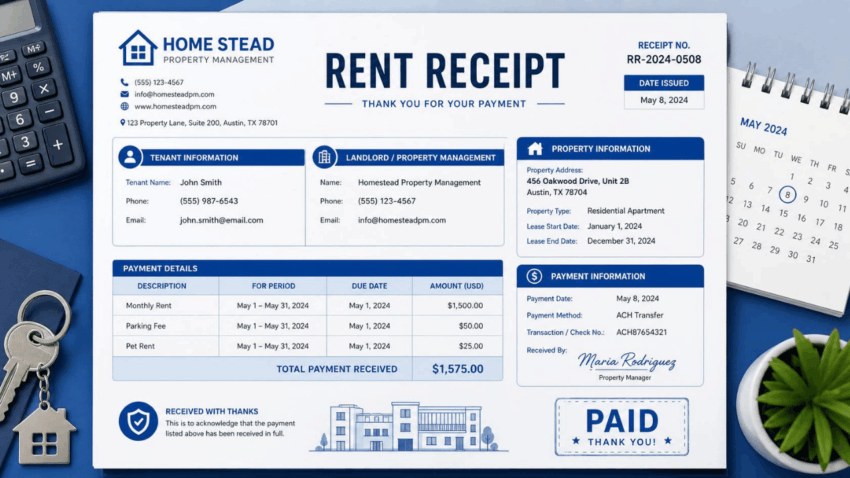
A rent receipt provides written confirmation that a rental payment has been received. It can contain important details such as the tenant’s name, rental property, payment date, amount paid, payment period, and landlord information.
Although a rent receipt is a simple document, it can contribute significantly to organized property management and transparent financial recordkeeping.
What Is a Rent Receipt?
A rent receipt is a document provided by a landlord or property manager to acknowledge payment from a tenant.
It can be issued for different types of rental properties, including:
- Residential houses
- Apartments
- Offices
- Shops
- Commercial buildings
- Warehouses
- Individual rooms
The receipt normally identifies the payment and the period to which it relates.
For example, a monthly receipt can confirm that rent for a particular month has been received.
Why Rent Receipts Matter
Rental payments can occur repeatedly over long periods. Without proper records, it may become difficult to determine whether a particular payment was made.
A receipt creates a written record that can be retained by both parties.
For landlords, receipts can support financial administration and income tracking. For tenants, they can provide evidence that a payment was made.
Maintaining these records can be particularly useful if questions arise about payment history.
Important Information on a Rent Receipt
A professional rent receipt generally includes several important details.
These may include:
- Receipt number
- Date of payment
- Landlord’s name
- Tenant’s name
- Rental property address or description
- Amount received
- Rental period
- Payment method
- Outstanding balance, if applicable
- Signature or authorization
The exact information can vary depending on the rental arrangement and applicable local requirements.
Tenant Information
The tenant’s name should be clearly identified.
If a property has multiple tenants, the receipt may identify the individual or individuals responsible for the payment.
Correct identification helps prevent confusion, particularly for landlords managing several properties.
For commercial rentals, the receipt may also include the name of the business making the payment.
Landlord Information
The landlord or property management company should also be identifiable.
This can include:
- Name
- Business name
- Contact information
- Address
- Other relevant details
Clear identification makes the document easier to associate with the appropriate rental arrangement.
Rental Property Details
A rent receipt should indicate which property the payment relates to.
For a landlord with multiple properties, this is particularly important.
The property may be identified by its full address or by another clear description.
Including the property information reduces the possibility of assigning a payment to the wrong rental unit.
Payment Amount
The amount received is one of the most important pieces of information on a receipt.
It should be clearly displayed and accurately recorded.
Depending on the circumstances, the amount may represent:
- Monthly rent
- Partial rent
- Advance rent
- Late payment
- Rent plus approved charges
If additional charges are included, separating them from the basic rental amount can improve clarity.
Rental Period
The receipt should ideally identify the period covered by the payment.
For example, it might indicate that the payment covers rent for a particular month.
This becomes particularly helpful when a tenant makes payments at different times or pays several months in advance.
The rental period provides context for the transaction.
Payment Methods
Modern tenants can use different methods to pay rent.
These may include:
- Cash
- Bank transfer
- Check
- Online payment
- Mobile payment
- Other agreed electronic methods
Recording the payment method can create an additional layer of financial documentation.
For electronic payments, landlords may also retain transaction references or confirmation numbers separately.
Digital Rent Receipts
Digital recordkeeping has become increasingly common.
Instead of providing a printed receipt, landlords can send a digital document through email or another electronic communication method.
Digital receipts can be stored on computers, cloud services, or other electronic systems.
This can make it easier to search for older transactions.
Digital documentation can also reduce the need for physical storage space.
Paper Rent Receipts
Paper receipts remain useful in situations where physical documentation is preferred.
Some landlords may maintain receipt books containing sequential receipt numbers.
Tenants can retain the original receipt as evidence of payment.
For important financial documents, it is sensible to store receipts in a safe and organized location.
Rent Receipts for Tenants
Tenants can benefit from keeping copies of their rental payment records.
A receipt can help demonstrate that rent was paid for a specific period.
This may be useful when reviewing personal finances, moving between properties, or resolving questions about rental history.
Tenants should consider keeping receipts for as long as they may reasonably be relevant to their rental and financial records.
Rent Receipts for Landlords
Landlords also benefit from maintaining organized receipt records.
A landlord may own one property or manage many rental units.
Accurate receipts can help track:
- Payment dates
- Monthly income
- Outstanding amounts
- Tenant payment history
- Rental periods
- Property-specific transactions
These records can make routine property administration more efficient.
Receipts and Financial Organization
A rent receipt is only one part of a larger financial recordkeeping system.
Landlords may also maintain rental agreements, maintenance records, utility records, expense documentation, and correspondence with tenants.
Keeping these documents organized can make property management easier.
A consistent documentation system can also help identify missing payments or unresolved issues.
Rent Receipts and Professionalism
Professional documentation can contribute to a positive landlord-tenant relationship.
A clear receipt demonstrates that the payment has been formally acknowledged.
It also creates a transparent record that both parties can reference.
Simple details such as consistent formatting, accurate dates, clear amounts, and appropriate identification can make rental administration appear more organized.
Rental Disputes and Documentation
Disagreements can occasionally occur between landlords and tenants.
Questions may arise about whether rent was paid, which month a payment covered, or whether an amount was received.
Written records can help clarify these situations.
A receipt does not automatically resolve every dispute, but it provides useful evidence of the transaction.
Other documents, such as bank statements and rental agreements, can provide additional supporting information.
Professionals looking for additional information about rental documentation and related business resources can read more here.
Rent Receipts and Tax Records
Rental income and expenses may have tax implications depending on the landlord’s location and circumstances.
Receipts can form part of a landlord’s financial records.
However, tax rules differ between jurisdictions, so property owners should consider applicable local requirements and consult an appropriate tax professional when necessary.
Tenants may also have specific documentation needs depending on local laws or employer arrangements.
Designing a Professional Rent Receipt
A good receipt should be easy to read.
A simple layout can often be more effective than an overly complicated design.
Important information should be clearly separated and presented in a logical order.
A professional receipt may include a heading, transaction details, payment information, and an acknowledgment section.
Consistent numbering can also help with record organization.
Frequently Asked Questions
What is a rent receipt?
A rent receipt is written confirmation that a landlord or property manager has received a rental payment from a tenant.
What information should a rent receipt contain?
It commonly contains tenant and landlord information, property details, payment amount, date, rental period, and payment method.
Can rent receipts be digital?
Yes. Digital receipts are commonly used and can be stored electronically for convenient recordkeeping.
Should tenants keep rent receipts?
Keeping rental payment records can be useful for demonstrating payment history and maintaining personal financial documentation.
Do landlords need to issue rent receipts?
Requirements vary depending on local laws and rental arrangements. Landlords should check the applicable regulations in their jurisdiction.
Conclusion
A rent receipt is a simple but valuable document in rental property management. It provides confirmation that a payment has been received and creates a record that can be referenced by both landlords and tenants.
Clear receipts can help organize rental payments, identify the period covered by each transaction, and reduce confusion about payment history. Digital formats have also made it easier to create, send, and store these documents.
Whether managing a single rental property or a larger portfolio, consistent documentation can support better financial organization. Tenants can likewise benefit from maintaining their own copies of rental payment records.
Ultimately, a well-prepared rent receipt should be accurate, easy to understand, and consistent with the rental agreement and applicable requirements. By maintaining clear financial records, both parties can contribute to a more transparent and organized rental relationship.
