

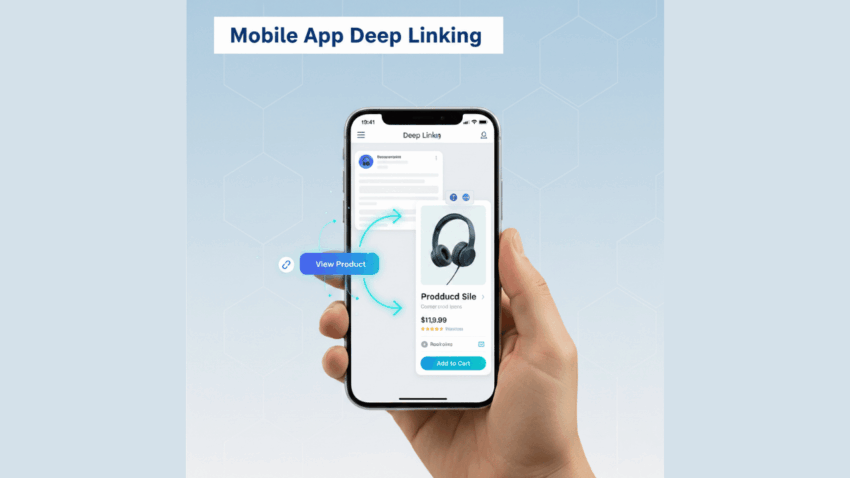
Use mobile app deep linking to boost engagement and conversions. Practical steps for link design testing analytics and integration for product and marketing.
How to use Mobile App Deep Linking in your app?
When a customer clicks on an advertisement link in an email and what they expect is to be taken to a product page in your application. But in reality, they end up being stagnated on the homepage, and they are compelled to navigate through several screens to find the offer they actually clicked for. Frustrated and confused, they leave the journey altogether. Such scenarios occur umpteenth times daily and directly affect the cost of businesses to make valuable conversions and content users. The answer is in applying mobile app deep linking which is a technology that facilitates connection between external contents and the in-app destination.
Deep linking changes the interaction experience of the users with mobile applications and establishes straight routes to inner content. Instead of viewing your app as a single point of entry, this technique enables users to instantly access any screen or feature over external sources such as emails, social media posts or web pages. To businesses that need to optimize their mobile strategy, mobile deep linking has become a need to remain competitive in an ever-mobile first economy.
Understanding Deep Linking Fundamentals
What Deep Linking Actually Does
Mobile app deep linking generates URLs that end up in a certain place in your application instead of directly opening up the default front page of your application. A deep link can be tapped by a user, and the system will know where the user is going and directs the user to the desired content, although the app might have to launch. This smooth flow does not require any redundant processes and takes one right to where he or she prefers to be.
Different Types of Deep Links
Conventional deep links
This type of deep links are used only in a situation where people have your app installed. These fundamental connections do not work in the event that the application is absent, and the user would be left with no path to take.
Deferred deep links
These deep links address this issue by retaining the reason why someone was to visit that destination to install the app and then to the target content on the first launch.
Contextual deep links
This kind of deep links are more advanced since they retain other data such as promotional codes or referral sources during the process of installation.
Implementing Deep Linking in Your Application
Setting Up Your Technical Foundation
Begin by specifying your URL scheme, or addressing the system of your app content. Select a brand name that identifies with your brand and get it registered by both iOS and Android. Also, make your app receive incoming URLs by configuring intent filters on Android and related domains on iOS. This technical background will make sure that your app will accept and read deep links properly.
Creating Your Link Structure
Write a logical hierarchy of your deep links, which reflects the structure of content of your app. Have simple and descriptive paths that are easy to follow by the users and developers. As an example, a shopping application could use a format, such as yourapp://products/shoes/running, instead of using confusing parameter values. Conventional naming helps to control and debug relationships as your application expands.
Testing Your Implementation
Check on links to ensure that they are functional in various situations. Compare the performance of having the app installed and having to download it initially. Check how the link works when the app is opened in the background and when it is not. Mobile marketing platform may be used to automate testing of different devices and operating systems which will guarantee uniform performance.
Optimizing Deep Linking Performance
Tracking User Journeys
Deep linking analytics gives you insight into the way that users handle your links. Keep track of the links that have the most interaction and what the users do once they arrive at their destination. A mobile application takes 90 percent of mobile internet time meaning it is important to know how users manoeuvre within your application. Monitor conversion rates of various deep link campaigns so that you can see what is getting your audience.
Personalizing User Experiences
Make deep links so that they provide personalized experiences depending on the user groups or behaviors. Send repeat customers to their wish lists or past searches. They can be used to guide new users to onboarding flows that are relevant to them. Personalization enhances activity and the users will value it more quickly.
Maintaining Link Integrity
Have someone review your deep links on a regular basis to make sure that they continue to work as your app grows. Add links when you reorganize navigation or change names. Have fallback measures that deal with broken links or old links gracefully by redirecting the users to similar appropriate content instead of showing them an error message.
Integrating Deep Linking Across Marketing Channels
Integrated Marketing of Email
Insert extensive links in email messages and redirect users to offers, new features, or customized information. Instead of having generic “Open App” buttons, use particular calls of action that deliver instant value.
Social Media Optimization
Post profound connections through the social sites to shorten the gap between discovery and action. Users are able to navigate automatically to an interesting product or article when they encounter it.
Push Notification Improvement
Turn simple alerts into triggers of direct actions. Connect notifications to that specific content on which they are referring to be it a message, update or an offer that has time constraints.
Conclusion
Deep linking in the context of mobile apps eliminates the obstacles in the way of users and content and results in more seamless experiences that facilitate engagement and conversions. With a well-built deep linking policy with extensive tracking and optimization you provide the user with the direct access they desire and at the same time you gain a lot of valuable information on their behaviour. The mobile deep linking investment does not go in vain since it can be used to enhance retention, increase conversion rates, and create a competitive advantage in the mobile market.
