
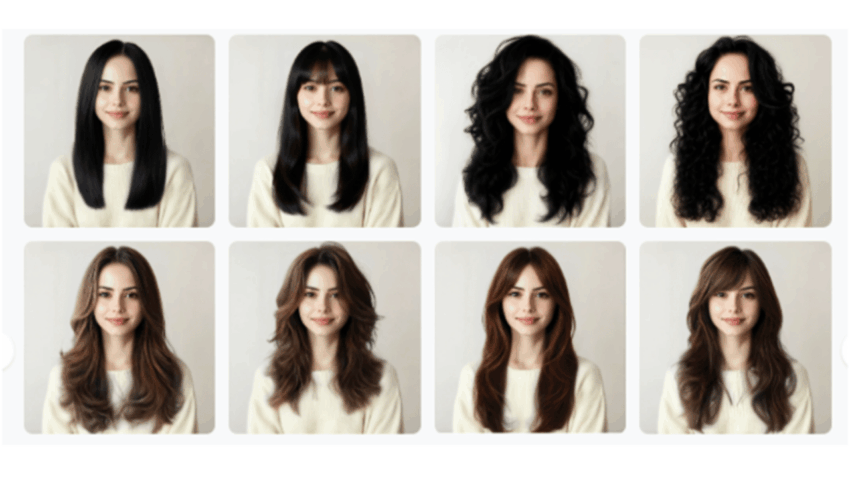
The intersection of technology and personal grooming has never been more fascinating than today. With the rise of AI-powered tools, people now have access to solutions that were previously only possible through trial and error in salons. Among these innovations, the ai hair style generator has emerged as a leading trend, helping users visualize hairstyles tailored specifically to their facial features. Platforms like FaceHair.ai have demonstrated that combining artificial intelligence with personal style insights can transform the way we approach hair.
Understanding the Face as a Framework for Hairstyling
One of the key principles of successful hairstyling is understanding the structure and proportion of the face. Professionals often break down the face into several components: forehead proportion, cheekbones, jawline, and overall face length and width. These metrics form the foundation for any hairstyle recommendation.
For instance, the classic “three-section proportion” divides the face into upper, middle, and lower thirds, helping determine which hairstyles will complement or balance certain features. Many users have found that hairstyles fail when these proportions are ignored. Factors such as contour lines, negative space, center of gravity, and symmetry all play critical roles. A style that suits one face may look entirely different on another because these subtle architectural elements vary from person to person.
Gender Differences and Facial Hair Considerations
Hairstyling is not only about hair length or texture—it also interacts with facial hair for men and accessories for both genders. For men, beards and sideburns provide a natural contour that can either enhance or detract from a hairstyle. For women, the relationship between hair, makeup, eyebrows, and glasses often determines how photogenic or harmonious a look will appear. Some surveys indicate that integrating these elements into digital hairstyle previews improves user satisfaction significantly, as it creates a more holistic view of one’s appearance.
Classifying Hairstyles by Face Shape and Occasion
When it comes to categorizing hairstyles, several factors influence the decision: face shape, hair volume, texture, age group, and even the intended occasion. A bob or lob works well for those with oval faces, while a shag or curtain style may flatter longer face shapes by softening angular features. Conversely, an undercut or asymmetrical style can highlight bold cheekbones or jawlines.
Occasion-specific recommendations are increasingly popular. Many users prefer conservative styles for the workplace but experiment with adventurous cuts for social events or photoshoots. Using an ai hair style generator, one can instantly preview different versions of a hairstyle for multiple scenarios, saving time and uncertainty.
Trial Wearing Methodology with AI
To make the most of AI-based hairstyle recommendations, following the correct “trial wearing” methodology is essential. Photo input guidelines significantly impact the accuracy of the analysis. Factors such as angle, lighting, expression, presence of glasses, bangs, or hair occlusion can all influence results. Many users have noted that photos taken under consistent, neutral lighting with minimal obstructions yield the most reliable predictions.
Data security is another important consideration. Platforms like FaceHair.ai ensure that uploaded images are stored and processed securely, giving users peace of mind while exploring new looks. After the initial AI recommendation, users are encouraged to select two “executable versions” of a style: one conservative, one advanced. This approach balances the desire for innovation with practicality, allowing users to test hairstyles gradually.
Hair Texture and Styling Strategies
Hair texture profoundly affects the outcome of any chosen style. Straight, wavy, curly, and coily textures each respond differently to cutting, layering, and styling. For example, layered cuts can enhance the natural bounce in wavy hair, while blunt cuts may better suit straight textures. AI-driven analysis often considers hair thickness and density, ensuring that the final recommendation aligns with what is physically achievable.
Maintenance and lifestyle factors also play a role. Commuters, fitness enthusiasts, or individuals who frequently tie their hair up may prefer low-maintenance styles. Conversely, those who enjoy frequent styling or photogenic experimentation may opt for styles that require more upkeep but provide a stronger visual impact. Many users have stated that AI-based suggestions help them anticipate these challenges before committing to a cut.
Step-by-Step Guide to Using an AI Hair Style Generator
- Capture High-Quality Photos: Use neutral lighting and a clear view of the face without obstructions like sunglasses or hats. Ensure hair is untangled and pulled back if needed.
- Upload Images Securely: Choose platforms that prioritize data security and do not store images unnecessarily.
- Input Personal Preferences: Indicate desired length, style types, or occasions. Some platforms allow specifying conservative or adventurous options.
- Receive Recommendations: AI algorithms analyze facial proportions, hair texture, and other features to generate several hairstyle options.
- Compare Styles: Use side-by-side comparisons to evaluate variations in volume, length, and layering.
- Consult Your Hairstylist: Present AI recommendations to a professional, asking questions such as:
- How will this style suit my face shape long-term?
- Which variations are easiest to maintain?
- How can I adapt this cut to seasonal changes or hair health?
- Fine-Tune Post-Creation: After the cut, review results, and make minor adjustments to align with preferences or lifestyle needs. Many users report higher satisfaction when they approach styling iteratively rather than attempting a drastic change at once.
Common Styling Mistakes to Avoid
Certain facial features require careful consideration to avoid mismatched results. Examples include:
- Long faces with high-volume tops, which can exaggerate length.
- Wide cheekbones paired with outward-protruding cuts, which may increase width visually.
- Strong jawlines with thick, straight bangs, which can create an overly harsh effect.
AI systems help mitigate these errors by simulating how each feature interacts with the hairstyle. Users have noted that trial previews prevent costly mistakes and ensure that the chosen look complements their natural structure.
The Role of Facial Analysis
Incorporating facial analysis enhances hairstyle recommendations significantly. This process evaluates proportions, symmetry, and other facial markers to ensure compatibility with various styles. Advanced AI tools can even simulate hair movement and lighting effects, offering an almost lifelike preview of the final result. Some surveys and platform reports indicate that users who engage with facial analysis tools experience greater confidence and satisfaction when making styling decisions.
Hairstyle Dictionaries and Feature Decomposition
To aid decision-making, many AI platforms provide a “style dictionary” with feature decomposition. This approach breaks down hairstyles into their core components—length, layering, volume, and fringe type—allowing users to mix and match elements based on personal preference. By visualizing each component separately, users can make informed choices without feeling overwhelmed by complex style terminology.
Post-Production Review and Improvement
After experimenting with AI-generated styles, users are encouraged to review results critically. Evaluating aspects such as hair fall, movement, and maintenance ease ensures that the style meets real-world expectations. Future AI iterations benefit from user feedback, as platforms can learn from prior selections to improve accuracy and personalization. This feedback loop creates a dynamic and evolving experience that aligns with individual preferences over time.
Conclusion
The integration of AI into hairstyling is transforming the way individuals approach personal grooming. By leveraging ai hair style generators, users gain unprecedented control over their look, informed by detailed facial analysis and contextual styling recommendations. From understanding facial proportions to accounting for hair texture, lifestyle, and maintenance, AI provides a comprehensive toolkit for experimenting confidently with new hairstyles.
While technology cannot replace professional judgment entirely, it enhances creativity, reduces uncertainty, and streamlines the decision-making process. As the industry evolves, embracing these tools may become as standard as consulting a mirror before leaving the house. For those ready to explore the possibilities, platforms like FaceHair.ai offer a glimpse into the future of personalized hairstyling—where your next look is only a few clicks away.