

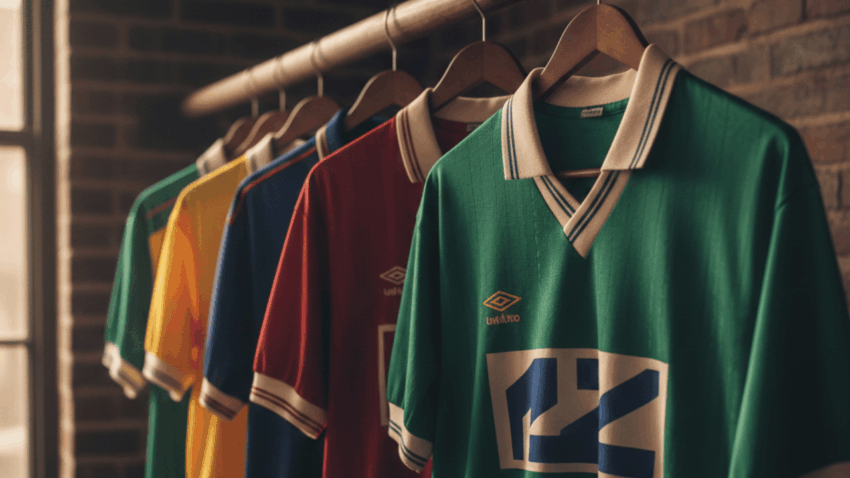
Vintage soccer jerseys are more than just pieces of clothing; they are artifacts that tell the stories of players and teams. They show the history of different fashions and designs in the sport. Retro football shirts have a market that is growing because of nostalgia, the different styles, and potential profits.
If you are looking for more information about Vintage Retro Soccer Jerseys – SoccerKit, go here right away
In this guide, the focus will be on the different technical aspects of vintage soccer jerseys, including the various types of kits, factors that determine their collectibility and authenticity, and their value. The guide will also cover some of the most notable designs of the 90′s and 2000′s along with some tips for authenticating them for collectors.
For more in-depth information, you should view Vintage Retro Soccer Jerseys – SoccerKit
Collecting vintage football shirts is driven by the nostalgia of the era they were created in and the aesthetics of the design. Modern kits have a more generic and uniform style. They also have the use of new synthetic materials. Retro jerseys have a recognizable style with bold new designs that were unique for their time.
To a collector, a jersey can create a strong connection to a specific match or a player. Older jersey’s and shirts are rarer and therefore more valuable. As most original shirts age, the ones that are well preserved become valuable collectibles. As well, the age of company logos and other branding can tell the age of a jersey.
Different Classes of Vintage Soccer Jerseys
Understanding the use of the different classes of vintage soccer jersey’s is crucial for valuation and proper collection. Vintage soccer jersey’s can be separated into classes which encompass all of their intended uses for a certain season.
Home Jerseys: Jerseys from Winning Seasons
Home Jerseys are the most important kits to represent a club’s identity. Each season, their color schemes and club crests change; however, they always present a home team. For jersey collectors, home jerseys from seasons when the team won a trophy are the most desired ones.
Away Jerseys: Unique Anthems
To ensure there’s no conflict of color, the Away jerseys are different to the Home jerseys. Because other teams can be wearing the same or similar uniforms, the Away jerseys can contain different color palettes and designs to make vthem isually appear like other teams. jersey collectors are more drawn to Away jerseys for their untraditional looks.
Third Jerseys: Special Designs
Third kits are worn when home and away kits are in color conflict and clash with an opponent. Traditionally, these kits are made in smaller quantities than usual kits, making them a bit scarcer than usual kits. Manufacturers use these kits to showcase abstract designs and use different colors, making them one of the most uniquely made kits in the vintage market.
Unique Vintage Football Kits
Some kits have become a cultural phenomenon and transcended the game itself. These kits become valuable and some serious collectors appreciate them and add them to their collection.
The Iconic Jersey of Diego Maradona
An example of a vintage apparel that possess a lot of value is the away kit of the Argentina national team worn by Diego Maradroa in the World Cup of 1994. Maradona wore the kit in the last World Cup game in which he played. It is a dark blue kit with diamonds shaped patterns on the sides of the kit. It is a valuable kit in collectors’ and historians’ opinion because of the scarcity of the kits and the historic value it possess.
Ronaldo’s Influence on Retro Jerseys Marketing
Ronaldo (R9), the Brazilian striker, was one of the first people to wear modern football jerseys during his career in the late 1990s to early 2000s. He was a part of the original Nike Mercurial brand. He wore the Brazil jerseys of 1998 and 2002, which, along with the era’s Inter Milan jerseys, specifically the ones with the Pirelli sponsorship, influenced 1990s sports marketing.
Origin of Football Jerseys from the 1990s and 2000s
Sublimation printing was invented in the 1990s. This resulted in the generation of the first jerseys with complex designs embedded in the fabric. The 90s also introduced a new era with wider fittings that included complex designs of different shapes, which later changed into slimmer fittings. In the early 2000s, clothes with double-layered fabrics were introduced.
Where to Buy Authentic Vintage Football Jerseys from the 90s and 2000s
If you want to buy authentic vintage jerseys, you will need to sacrifice some of your time. This is because the shops that sell modern reproductions are very difficult to differentiate from the ones that sell authentic vintage reproductions.
Where to Buy 90s and 2000s Retro Vintage Soccer Jerseys
If you want to buy authentic jerseys, you will need to go to a shop that sells vintage jerseys, an auction, or a verified marketplace. Some vintage shops sell items that have already been inspected to make sure the items are authentic, which is better than an ordinary marketplace.
How to Find Vintage Football Kits
To see if a kit is authentic, you can check product codes, internal labels, and packaging information.
Product Codes: Inside labels have a product code that can be looked up online to verify authenticity.
Sponsorship Material: While modern counterfeits use flat plastic transfers, authentic and older sponsor kits use flocked plastic transfers.
Country of Manufacture: Vintage kits have differing country tags than modern kits such as UK, and Italy instead of Vietnam.
Why Match-Worn Shirts are Valuable
Match-worn shirts differ from other store versions (replica versions of kits available to fans). Match-worn shirts are shirts prepared for, or worn by, players (these are usually unbranded, have no tag, and may have different mesh, sizing, or other features that are different from commercial versions). These kits are at the top of the hierarchy.
Why is Nostalgia and Throwback Culture Applicable to Soccer
Today’s merchandise is influenced by the vintage, retro aesthetic. Remake collections that look like the vintage kits are popular.
Why Does Nostalgia Affect Football Fans
When fans of a sport reflect on the past, the manufacturers harness that feeling, and use it as a marketing tool. Wearing retro kits and vintage-style jerseys is a common casual wear practice that is accepted in society. This practice goes beyond just collectors and encompasses a large section of the population.
Choosing What to Collect
When starting a collection, it is a good idea to set criteria to focus on, such as one team or player, or a certain era/design style. Collectors also often obtain other related items, such as prints, posters, or match programs, to provide the jersey’s context. Collecting vintage soccer jerseys as an investment or to preserve history involves a bit of knowledge, including understanding value, the history of textiles, manufacturing value, and the history of the sport.
