

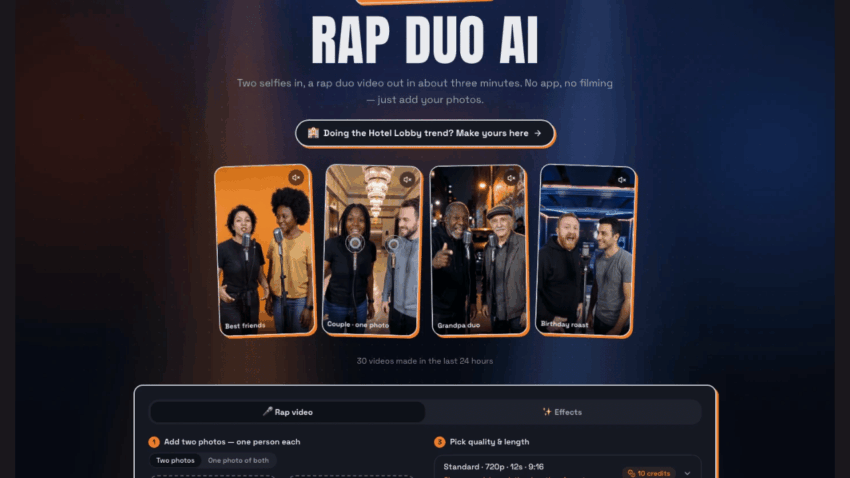
Short-form vertical video demands consistent posting schedules that quickly overwhelm manual post-production teams. Integrating Rap Duo AI into editing schedules automates dual-character lip alignment so creators maintain rapid publishing volume.
Editorial departments managing multiple social channels understand that publishing frequency directly influences audience discovery across mobile recommendation feeds. When a channel regularly uploads fresh, entertaining video content, platform algorithms steadily distribute clips to new viewers. Among emerging short-form formats, two-person collaborative videos—such as rhythmic rap duels, friendly roasts, and partner shout-outs—drive exceptional watch time because audiences stay engaged to see how performers interact dynamically on screen.
However, producing collaborative music content traditionally requires an exhausting editing workload. When two creators record separate vocal tracks in different home settings, video editors must spend hours balancing disparate room acoustics, cutting back and forth across a timeline, and painstakingly aligning mouth movements to fast percussive beats. Navigating this manual friction on the Rap Duo platform offers immediate relief, replacing laborious timeline manipulation with automated neural audio-visual synthesis.
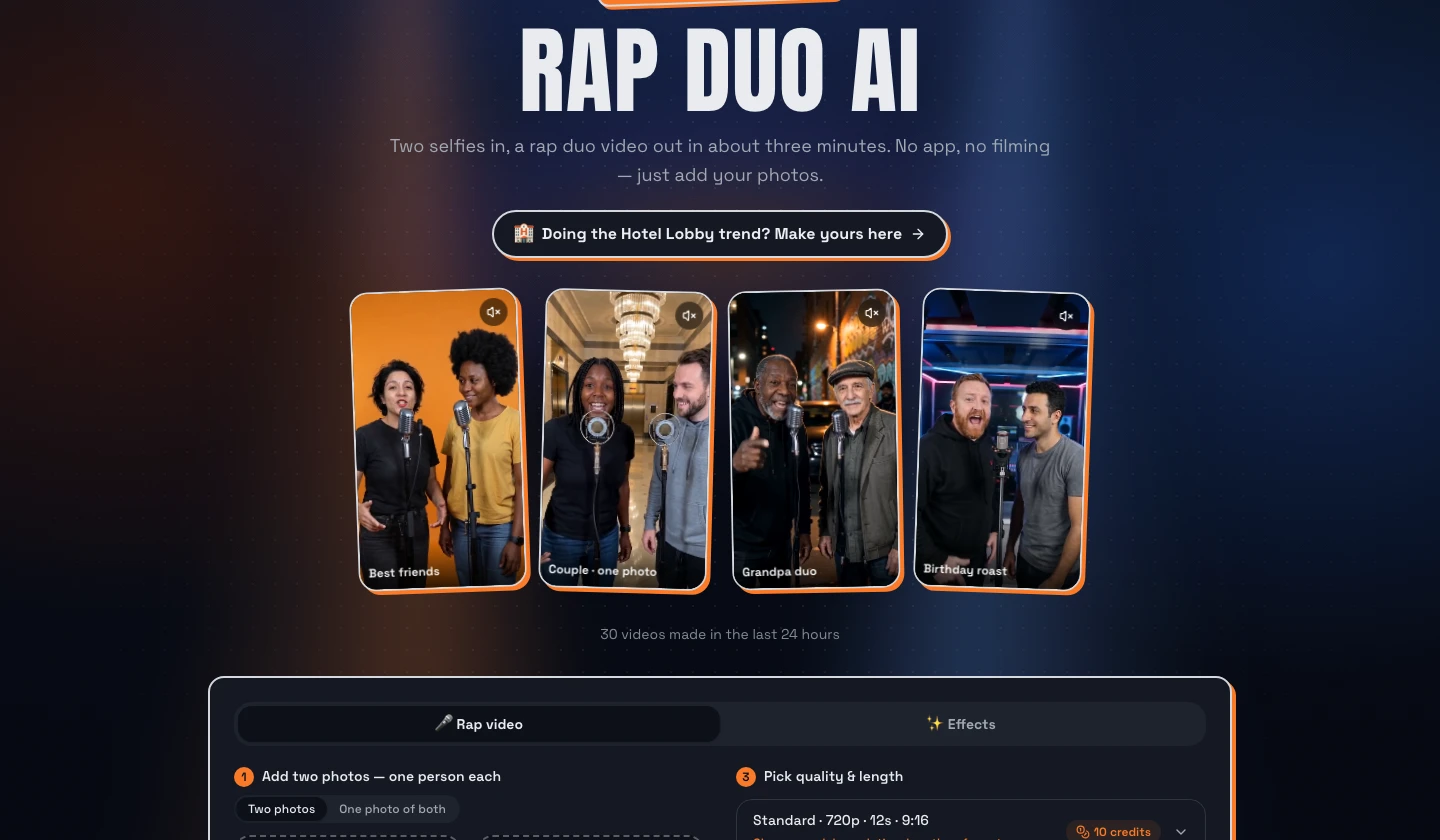
Overcoming Post Production Bottlenecks In Short Form Social Video
In conventional digital post-production, synchronizing two independent performers poses complex audio-visual challenges. Beyond simple cuts between talking heads, musical video requires tight alignment with bass drops, percussion transients, and lyrical phrasing. If a performer’s mouth shapes lag behind sixteenth-note syllables, the entire illusion collapses, resulting in an unconvincing clip that viewers swipe away immediately.
Furthermore, managing disparate source assets creates friction. When non-professional creators supply smartphone recordings captured in dim bedrooms or noisy offices, post-production teams spend valuable hours fixing audio reverberation, applying noise suppression filters, and grading mismatched video color spaces. An editor might spend an entire afternoon balancing EQ curves and manual pitch corrections, only to discover that visual cuts between performers feel disjointed because the underlying takes were recorded at slightly different tempos.
Physical shooting schedules present an even deeper constraint for distributed production teams. Coordinating two creators across disparate time zones requires matching lighting hardware, setting up remote monitoring links, and directing non-professional talent through dozens of repetitive takes. These technical hurdles turn simple 15-second creative concepts into costly, multi-day editing marathons that stifle publishing momentum and drain departmental resources.
Automating Phonetic Alignment And Dual Subject Facial Dynamics
Transitioning to procedural generation solves these editorial bottlenecks by unifying audio synthesis and facial animation into a single algorithmic process. Rather than forcing editors to manually cut between performers in Premiere Pro or Final Cut, neural synthesis architectures construct original rhymes, synthesize rhythmic vocals, compose an underlying beat, and animate facial movement simultaneously from two static portraits.
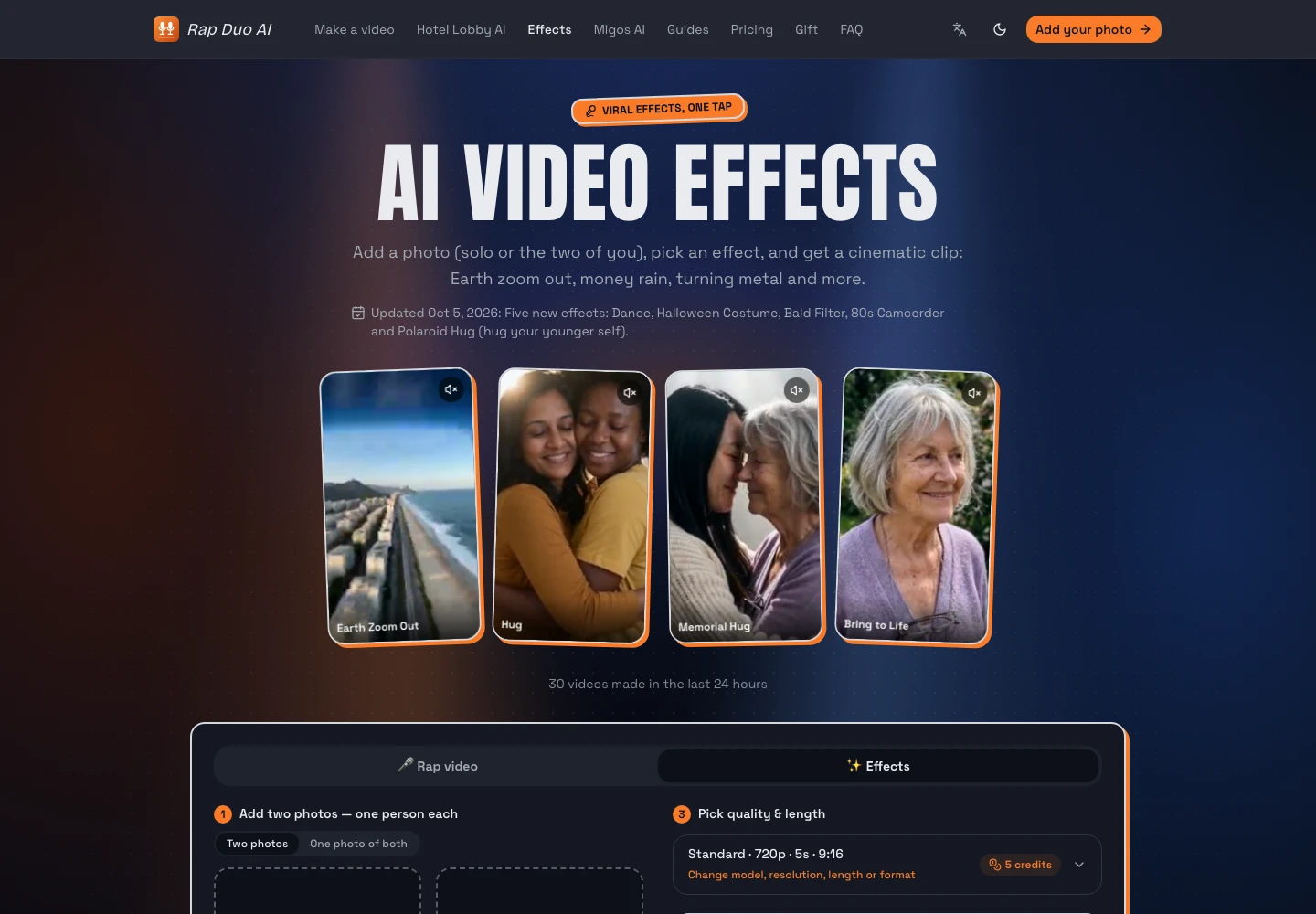
Deploying Rap Duo Video AI eliminates manual timeline alignment by mapping facial coordinate vectors directly to acoustic waveforms. When two frontal headshots are submitted, the engine identifies anatomical landmarks including lip contours, jaw angles, and pupil placement. As the synthesized vocal performance alternates between verses, Rap Duo generates natural mouth articulation, rhythmic head bobs, and subtle expressive shifts that mirror authentic hip-hop performance dynamics.
Resolving Syllable Latency And Facial Distortion In Fast Cadences
A primary failure mode in early facial animation tools was syllable latency, where mouth movements blurred into generic warping during rapid verbal delivery. Modern neural pipelines avoid this distortion by processing phonetic transitions in tight temporal slices. When a verse demands crisp plosive consonants like P, T, and B, the model enforces precise lip closure before opening into resonant vowel envelopes.
This phonetic fidelity ensures that virtual performers maintain visual integrity throughout fast-paced exchanges. Viewers see sharp, natural mouth movement and plausible facial articulation rather than awkward rubberized textures. Because the system calculates bone structure and muscle tension around the jaw rather than stretching flat pixel textures, head tilts and rhythmic bounces retain physical plausibility across every beat. For content teams striving to deliver broadcast-quality digital entertainment, this structural stability ensures that generated clips look native and polished on high-resolution smartphone screens.
Moreover, the dual-subject framing introduces organic performance dynamics. The engine does not simply render two isolated heads in separate boxes; it positions both subjects within a cohesive shared stage environment. When one performer delivers a punchline, the counterpart reacts with subtle nods and attentive eye focus, creating the visual impression of an authentic, lively studio cypher that holds mobile audience attention.
Streamlining Source Asset Intake And Pre Generation Checklists
To maximize output consistency and prevent wasted generation runs, editorial teams should establish clear asset intake protocols. Neural synthesis models depend heavily on the quality and lighting of source portraiture. Providing clear guidelines to contributors or remote team members ensures that every generation run delivers crisp visual results on the first attempt.
- Collect front-facing, well-illuminated selfie portraits where both eyes, eyebrows, and mouth lines are clearly defined without harsh shadows.
- Avoid photos with reflective eyewear, face masks, or heavy beauty filters that alter facial geometry.
- Confirm that each image depicts only one subject to prevent algorithmic identification confusion during stage placement.
- Provide concise thematic context in the optional topic field to steer lyrical composition toward relevant brand or personal anecdotes.
- Select an appropriate environmental stage such as the iconic orange Hotel Lobby booth or modern Studio Booth to match the clip’s tone.
Standardizing Environmental Framing Across Thematic Staging Options
Selecting the right staging environment establishes immediate visual credibility. The platform’s default orange Hotel Lobby booth offers an instantly recognizable, punchy backdrop inspired by viral COLORS studio performances. This warm, cohesive environment grounds the virtual performers, focusing audience attention on the vocal delivery rather than isolated background elements.
Alternative backdrops, including the Luxury Lobby and Street Cypher, allow editors to tailor video aesthetics to specific brand tones or musical genres. Because lighting and background textures are pre-rendered and balanced around the performers, editorial desks bypass green-screen keying and complex color grading, receiving fully composited 720p vertical video files ready for direct distribution.
Standardizing these environmental choices across weekly content batches creates recognizable visual branding for social channels. When followers recognize the signature orange booth or sleek studio lighting in their feeds, viewer familiarity increases initial watch duration during the critical first three seconds, driving higher algorithmic engagement scores.
Budgeting Studio Compute And Managing Non Expiring Balances
Editorial operations require flexible billing arrangements that accommodate unpredictable production sprints. Managing video production via credit packs enables creative departments to scale output up or down without financial penalties or stranded assets. Unlike subscription models with rigid use-it-or-lose-it terms, the platform’s credit packs never expire, ensuring that creative budgets remain intact between major campaigns.
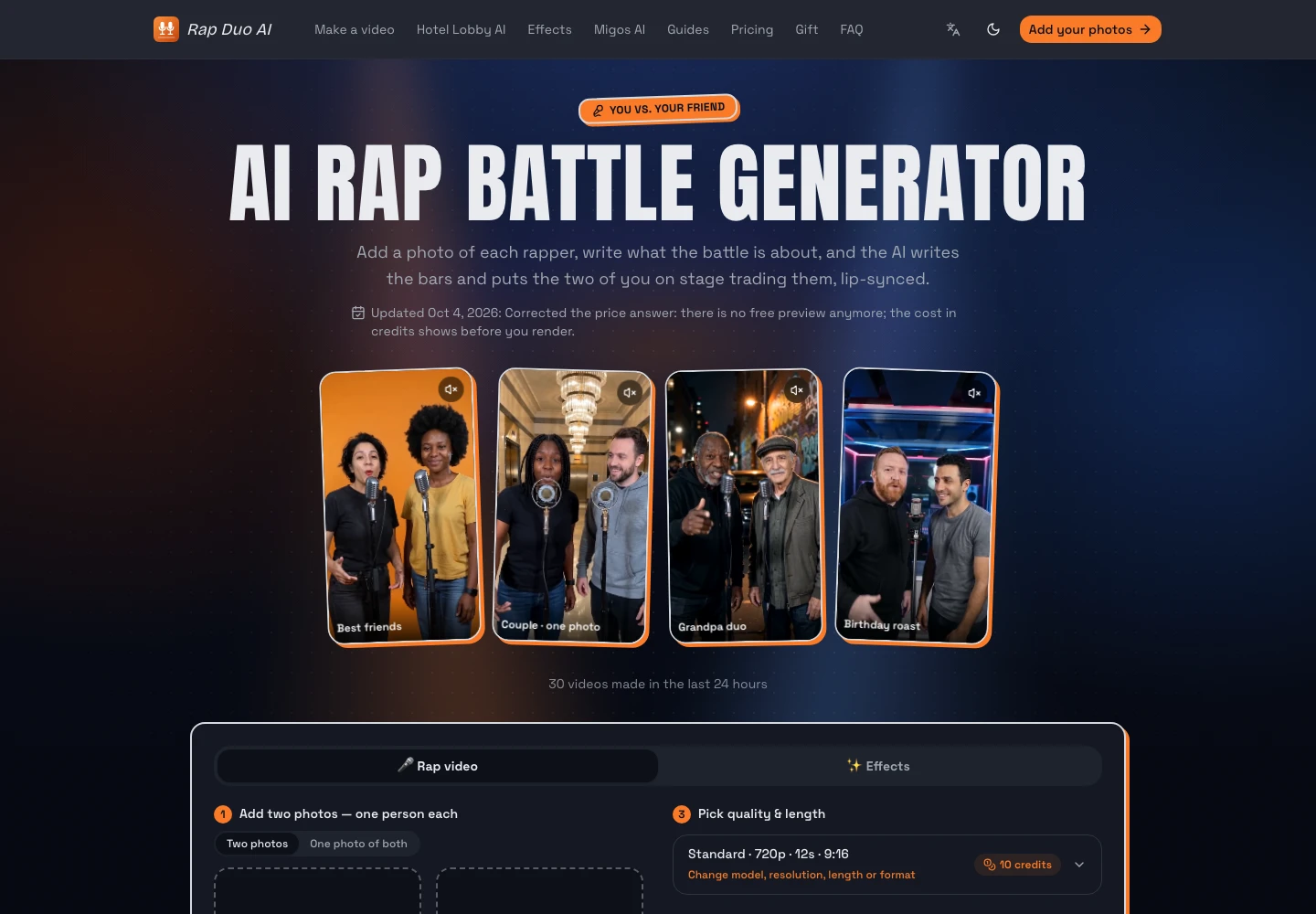
Teams can purchase one-time credit packs—such as twenty-nine dollars for five completed songs or ninety-nine dollars for thirty-five songs—and draw down balances as content opportunities emerge. For high-volume publishers producing continuous weekly short-form clips, monthly subscription tiers reduce individual video costs down to approximately one dollar per completed track, significantly lowering per-asset production expenditures.
Furthermore, account balances are shielded by an automated no-charge policy on failed renders. If an unusual source image format, network timeout, or safety filter prevents a video from rendering cleanly, credits are returned immediately to the user’s balance. This fair-billing architecture allows video editors to test bold creative concepts freely without worrying about administrative budget disputes.
Exported clips are delivered in high-definition vertical 9:16 format without watermarks, allowing editors to import files directly into Premiere Pro, CapCut, or DaVinci Resolve. Post-production teams can easily overlay branded intro graphics, add animated captions, or blend custom sound effects before scheduling uploads across social channels.
Key Operating Standards For Consistent Clip Generation
Integrating procedural video generation into everyday editorial operations empowers content teams to maintain high publishing momentum without burning out creative staff. By automating complex audio synthesis and facial lip synchronization, procedural tools free editors to focus on overarching storytelling, audience strategy, and community engagement.
When remote collaborators need to produce dynamic musical content quickly, utilizing Rap Duo transforms static headshots into engaging, shareable video entertainment within minutes. By maintaining rigorous source photo quality and leveraging pre-configured staging environments, modern editorial desks can satisfy demanding social algorithms with polished, high-retention video assets that consistently resonate with mobile audiences.
