

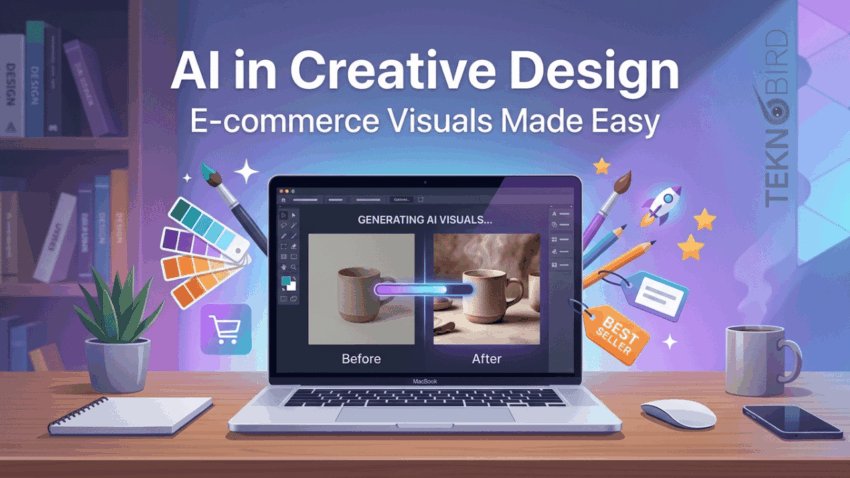
Artificial intelligence has completely changed the way we approach digital art and online retail. Whether you run a small online store or manage a large digital brand, creating high-quality visuals is no longer a time-consuming hurdle. You can now generate breathtaking graphics in seconds, completely shifting how businesses handle their visual content strategy.
Using AI for Creative & E-commerce Design gives you a massive advantage over competitors who still rely entirely on traditional, expensive photoshoots. By combining smart algorithms with your unique creative vision, you can produce everything from custom backgrounds to flawless catalog images. Let us explore exactly how you can implement these powerful tools to elevate your visual content and drive better engagement.
The Rise of AI for Creative & E-commerce Design
Not too long ago, producing professional digital art or product catalogs required expensive software and years of training. You had to hire photographers, rent studio space, and spend hours editing raw files. Now, generative machine learning models have democratized the entire creative process.
Platforms like Midjourney, DALL-E, and CapCut have made it possible for anyone to generate striking visuals with just a few text prompts. This technology allows creators and business owners to experiment with different styles instantly. You can test out multiple visual concepts before committing to a final campaign direction.
This shift toward automated design does not replace human creativity. Instead, it acts as a powerful assistant that speeds up your workflow. You can brainstorm ideas, generate base images, and then refine them to fit your specific branding guidelines perfectly.
Transforming Digital Art: How to Generate Stunning Visuals
Digital creators constantly need fresh backgrounds, textures, and hero images for their projects. Finding the perfect stock photo can be frustrating, especially when you have a specific color palette or mood in mind. Artificial intelligence solves this problem by giving you total control over the output.
If you want to create wallpapers with ai, you just need to type a clear description of your vision. You can specify the lighting, the art style, and even the camera angle. This flexibility is perfect for web designers, app developers, and digital artists who need unique assets quickly.
To get the best results, always be specific with your prompts. Instead of asking for a “mountain background,” ask for a “minimalist geometric mountain range at sunset with neon pink and purple accents.” The more details you provide the tool, the closer the final image will match your original concept.
Revolutionizing Online Retail with Smart Imagery
Running an online store requires dozens, if not hundreds, of high-quality product images. Customers rely heavily on these visuals to make purchasing decisions. If your photos look unprofessional, shoppers will likely bounce to a competitor’s site.
Fortunately, an e-com product photo ai tool can take a simple smartphone picture of your item and transform it into a studio-quality asset. These tools automatically remove messy backgrounds, adjust lighting, and place your product into realistic lifestyle scenes.
You no longer need to buy expensive props or wait for good natural light to shoot your catalog. You can generate a photo of your new coffee mug sitting on a rustic wooden table in a sunlit kitchen, all without leaving your desk. This capability helps you launch new products faster and keep your storefront looking fresh and professional.
Choosing the Right AI Tools for Your Brand
With so many generative platforms available, selecting the right software for your business can feel overwhelming. The key is to look for tools that match your specific workflow and technical skill level. Some platforms require complex prompt engineering, while others offer simple, user-friendly interfaces.
For pure artistic generation, tools like Stable Diffusion offer incredible control, though they have a steeper learning curve. If you need something fast and intuitive, browser-based suites often provide dedicated templates for social media posts, website banners, and marketing emails.
When evaluating these tools, consider their export quality and commercial licensing rules. Make sure the platform you choose allows you to use the generated images for commercial purposes, especially if you plan to use them in paid advertising campaigns or directly on your product packaging.
Streamlining the Creative Process for Better Workflows
Integrating smart generation tools into your daily routine requires a slight shift in how you plan your content. Start by creating a visual mood board for your upcoming projects. Once you know the aesthetic you want, you can use generative models to build the foundational pieces of your campaign.
Use these tools to generate multiple variations of an image. If you are running an A/B test for a Facebook ad, generate the same product photo with three different backgrounds. This allows you to gather data on what specific visual elements resonate most with your target audience.
You can also use artificial intelligence to expand existing images. If you have a square photo that you need to use as a wide website banner, generative fill tools can seamlessly extend the background. This saves you the trouble of cropping images awkwardly or leaving empty white space on your web pages.
Maintaining Brand Consistency Across Platforms
One of the biggest challenges when using generative models is keeping your brand identity consistent. If every image looks like it came from a different artist, your website will look disorganized and confusing. You need to establish strict guidelines for your visual outputs.
Create a list of specific keywords that define your brand’s style. If your brand is modern and sleek, always include words like “minimalist,” “clean lighting,” and “soft shadows” in your prompts. If your brand is energetic and youthful, use keywords like “vibrant colors,” “dynamic angles,” and “high contrast.”
Save your most successful prompts in a shared document so your entire team can use them. Many advanced platforms also let you train custom models on your existing brand assets. This ensures that every new image you generate perfectly matches the color grading and stylistic tone of your previous marketing materials.
Future Trends in AI Image Generation
The technology behind image generation improves almost every single week. We are already seeing the integration of these tools directly into standard content management systems and e-commerce platforms. Soon, generating a product lifestyle shot will be as standard as typing a product description.
We can expect even more precision in the near future. Models are getting much better at rendering difficult elements like human hands, complex typography, and accurate lighting reflections. This will blur the line entirely between traditional photography and generated art.
As these tools become more accessible, the brands that succeed will be the ones that use them creatively. It will not just be about who can generate the sharpest image, but who can tell the most compelling visual story using these new resources. Staying updated on these trends ensures your brand remains visually competitive.
Conclusion
Mastering these new technological tools gives you incredible freedom to execute your creative vision without budget constraints. From generating captivating website backgrounds to producing professional-grade item listings, the possibilities are virtually endless.
Implementing AI for Creative & E-commerce Design streamlines your workflow, allowing you to focus more on strategy and less on tedious production tasks. By choosing the right platforms and maintaining strict brand guidelines, you can scale your visual content effortlessly. Start experimenting with these generative models today, and watch as your digital storefront and marketing campaigns transform into visually stunning experiences that capture your audience’s attention.
