

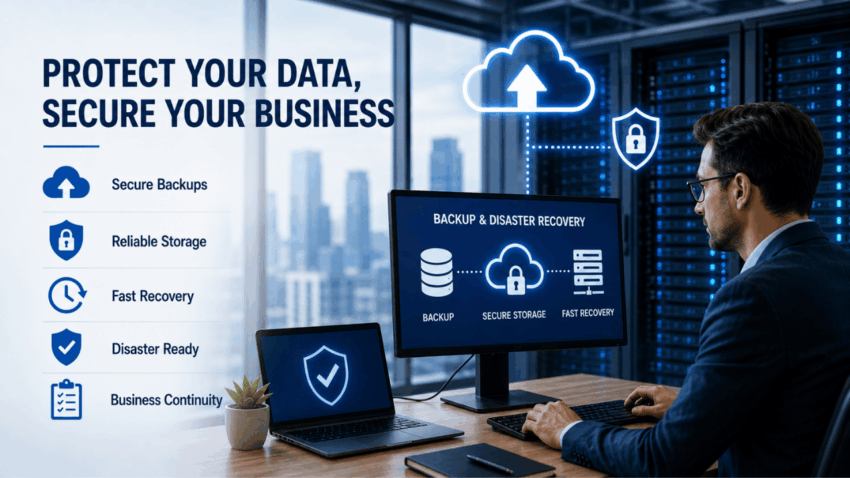
Data loss can happen without warning. Hardware failures, cyberattacks, human error, and natural disasters all have the potential to disrupt business operations and compromise important information.
A strong backup and recovery plan reduces risk. Managed IT services help businesses prepare for unexpected events while improving their ability to recover quickly and continue operating.
Why Data Backup and Disaster Recovery Matter for Modern Businesses
Businesses rely on digital information to support daily operations, customer service, and decision-making. Understanding the cost of managed IT helps organizations evaluate service options while building backup and recovery strategies that protect critical systems and data.
1. Protecting Critical Business Data
Every business stores information that supports its operations. Customer records, financial documents, employee data, and internal files all play an important role.
Losing access to that information can create serious challenges. Data protection helps ensure valuable business assets remain available when unexpected issues occur.
2. Reducing Operational Downtime
When systems become unavailable, productivity often stops. Employees may lose access to files, applications, and communication tools needed to perform their work.
Reliable recovery planning helps restore operations faster. Downtime reduction allows businesses to resume normal activities with minimal disruption.
3. Preventing Financial Losses
Data loss incidents can create direct and indirect costs. Businesses may face recovery expenses, lost productivity, delayed projects, and potential revenue losses.
Effective planning helps reduce those risks. Financial protection becomes stronger when recovery processes are established before problems occur.
4. Supporting Regulatory Compliance
Many industries must follow regulations regarding data storage, retention, and protection. Failing to meet these requirements can create legal and financial consequences.
Backup and recovery planning supports compliance efforts. Regulatory readiness helps organizations maintain proper safeguards for sensitive information.
5. Strengthening Cybersecurity Preparedness
Cyberattacks continue to target organizations of all sizes. Ransomware, malware, and unauthorized access attempts can affect critical systems and business data.
Strong backup systems provide an additional layer of defense. Cyber resilience helps organizations recover information without relying solely on compromised systems.
6. Improving Business Continuity
Unexpected disruptions can affect operations for hours, days, or even weeks. Businesses that lack recovery planning often face longer interruptions.
Prepared organizations respond more effectively. Business continuity allows essential operations to continue despite unexpected events and technical failures.
Core Elements of an Effective Backup and Recovery Strategy
A successful backup and recovery plan requires more than copying files. Multiple components must work together to ensure information remains protected and recoverable.
- Regular Backups: Frequent backups reduce the amount of data that could be lost during an incident.
- Offsite Storage: Storing copies in separate locations protects information from local disasters.
- Recovery Testing: Routine testing verifies that backups can be restored successfully.
- Automated Monitoring: Continuous oversight helps identify failures before they become major problems.
- Security Controls: Encryption and access management protect backup data from unauthorized use.
- Documentation: Clear recovery procedures improve response times during emergencies.
- Recovery Objectives: Defined recovery goals help organizations prioritize restoration efforts.
How Managed IT Services Strengthen Backup and Recovery Planning
Managed IT providers bring experience, monitoring tools, and structured processes that improve backup reliability and disaster recovery preparedness.
Automated Backup Management
Manual backup processes often depend on employee consistency. Missed tasks and human error can create gaps that leave important data unprotected.
Automation helps eliminate those risks. Backup consistency improves when systems follow scheduled processes without relying on manual intervention.
Continuous System Monitoring
Backup failures are not always obvious. Problems may go unnoticed until a recovery attempt reveals that data was never properly saved.
Managed providers monitor systems continuously. Real time visibility helps identify and resolve issues before they affect recovery capabilities.
Faster Disaster Recovery Response
The speed of recovery often determines how much disruption a business experiences. Delayed responses can increase operational and financial impacts.
Organizations using managed IT services often benefit from structured recovery procedures designed to restore systems quickly and efficiently.
Improved Backup Security
Backups themselves can become targets for cybercriminals. Unsecured backup environments may expose sensitive information to theft or manipulation.
Managed IT teams implement protective measures. Backup security improves through controlled access, encryption, and ongoing monitoring practices.
Recovery Testing and Validation
A backup only has value if it can be restored successfully. Many organizations discover problems because they never test their recovery processes.
Routine testing confirms system readiness. Recovery validation helps ensure that critical data remains accessible when needed most.
Scalable Data Protection Solutions
As businesses grow, data volumes often increase significantly. Backup systems must evolve to support expanding storage and recovery requirements.
Managed providers adjust strategies accordingly. Scalable protection allows organizations to maintain reliable backup coverage as operational needs change.
Warning Signs Your Current Backup Strategy Needs Improvement
Many organizations assume their backups are working properly until a problem occurs. Identifying weaknesses early can help prevent larger issues later.
- Frequent backup failures
- No documented recovery procedures
- Infrequent backup schedules
- Lack of recovery testing
- Single storage location for backups
- Unclear employee responsibilities
- Slow restoration times
- Outdated backup infrastructure
Long Term Benefits of Managed Backup and Recovery Services
The value of managed backup and recovery extends beyond immediate protection. Businesses often gain operational advantages that support long term stability and growth.
1. Greater Business Resilience
Every organization faces potential disruptions. Hardware failures, cyber incidents, and natural disasters can affect operations at any time.
Prepared businesses recover more effectively. Operational resilience improves when recovery systems are designed to support continuity during challenging situations.
2. Reduced Risk Exposure
Risk cannot be eliminated entirely, but it can be managed. Backup and recovery planning reduces the likelihood of severe consequences following an incident.
Managed oversight strengthens preparedness. Risk mitigation helps organizations respond more confidently to unexpected events.
3. Better Resource Allocation
Internal teams often have multiple responsibilities competing for attention. Managing backup systems effectively requires time, expertise, and consistent oversight.
Outsourcing support reduces that burden. Resource optimization allows employees to focus on core business functions rather than technical administration.
4. Increased Customer Confidence
Customers expect businesses to protect information and maintain reliable services. Significant disruptions can affect trust and long term relationships.
Strong recovery capabilities support reliability. Customer confidence grows when organizations demonstrate preparedness and operational stability.
5. Support for Business Growth
Growing businesses often generate larger amounts of data and depend on more technology systems. Recovery requirements become increasingly complex over time.
Managed solutions help address those changes. Growth readiness ensures backup strategies remain effective as organizations expand.
6. Improved Operational Stability
Reliable systems contribute to smoother business operations. Backup and recovery planning reduces uncertainty and helps minimize the impact of technical disruptions.
Consistent oversight supports long term performance. Operational stability becomes easier to maintain when recovery processes are regularly monitored and improved.
Conclusion
Managed IT services play an important role in strengthening data backup and disaster recovery planning. From automated backups and continuous monitoring to recovery testing and faster response times, managed support helps businesses prepare for unexpected disruptions. A well designed recovery strategy protects valuable information, reduces downtime, and supports business continuity. Organizations that invest in proactive planning are often better positioned to recover quickly and maintain stable operations when challenges arise.
