

Why Mining Efficiency Matters
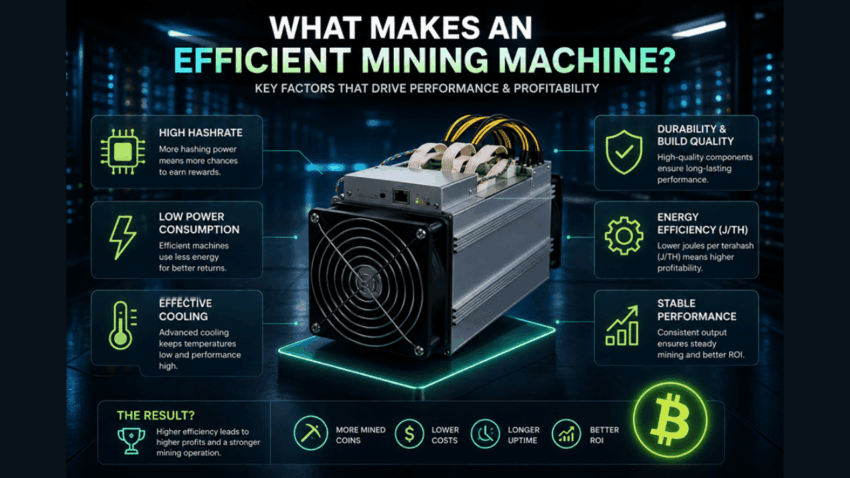
A mining machine can look strong because of its hashrate, but that number alone does not tell you how good the machine really is. The more useful question is simple: how much power does the machine use to produce that hashrate?
That is where efficiency comes in. A miner with better efficiency can do more work with less electricity. For miners, this matters because electricity is one of the highest running costs. Even a powerful machine can become harder to manage if too much of the revenue goes into the power bill.
So when buyers compare mining hardware, they should not look at hashrate only. Power use, efficiency, cooling, uptime, price, and electricity rate all need to be checked together.
Hashrate Is Only the First Number to Check
Hashrate shows how much mining power a machine can produce. For Bitcoin mining hardware, this is usually shown in TH/s, or terahashes per second. A higher hashrate means the machine can perform more calculations every second.
But hashrate does not work alone. A high-hashrate machine may also use a high amount of electricity. If the power use is too high, the extra output may not help as much as it looks on paper.
A strong Bitcoin miner should be compared by hashrate, power use, and efficiency together, not by one number only.
For example, two miners may have similar output, but the one using less electricity can be easier to run over time. That is why serious buyers always check efficiency before making a final choice.
Power Use Decides the Real Running Cost
Power use is one of the biggest factors in mining. A miner does not run for a few minutes and stop. It usually runs for long hours every day, so the electricity bill becomes part of the mining result.
If a machine uses 3,500W, it will cost more to run than a machine using 1,700W. That does not automatically make the higher-power machine wrong, but the extra power cost has to be counted.
This is where many buyers make mistakes. They check the estimated daily revenue but forget to subtract electricity, pool fees, cooling cost, and possible downtime. The better number is the net result, not the revenue before expenses.
A miner may work well in one location with a low power rate and look less practical in another place with a higher electricity cost. The same machine can give very different results depending on where it is running.
Efficiency in J/TH Shows the Real Difference
Mining efficiency is usually measured in J/TH, or joules per terahash. Lower J/TH means the machine uses less energy for each unit of mining power.
This is one of the easiest ways to compare mining hardware. A miner with lower J/TH is usually more practical because it uses less electricity to produce the same type of work.
For a Crypto miner buyer, this number helps show whether the machine is built for better long-term use or only looks attractive because of hashrate.
Efficiency becomes even more important when market conditions are tight. If coin price drops or mining difficulty rises, a more efficient miner has more room to keep running with a reasonable margin. A less efficient machine may lose margin faster because more revenue goes into electricity.
Cooling Also Affects Miner Performance
Cooling is not just about keeping the machine safe. It also affects how steadily the miner can run.
If the miner gets too hot, the fans may run harder, hashrate may become unstable, and the machine may need more attention. Poor airflow can also increase dust buildup and make maintenance harder.
A good setup should allow cool air to enter the miner and hot air to move away from it. If hot air comes back toward the intake side, the miner may work harder than needed.
This is why the setup area matters. Clean airflow, proper spacing, regular dust checks, and controlled room temperature can help the miner perform more consistently.
Uptime Matters More Than It Looks
An efficient miner is not very useful if it keeps going offline. Uptime is a simple but important part of real mining performance.
A machine may have strong specs, but if it stops often because of heat, network issues, power problems, or hardware faults, the final result becomes weaker. Every hour of downtime means missed mining work.
This is why buyers should also check build quality, warranty, support, and maintenance needs. A stable miner with slightly lower hashrate can sometimes be more practical than a higher-output machine that needs constant attention.
Efficiency is not only about electricity. It is also about how reliably the miner turns power into mining output every day.
Price and Payback Time Should Be Compared
The buying price also affects the final decision. A miner can have strong efficiency, but if the machine price is too high, the payback time may stretch longer than expected.
Payback depends on hashrate, power use, electricity rate, pool fees, miner price, uptime, and market conditions. These numbers can change, so buyers should not depend on one fixed estimate.
For checking profitability, miners can look live mining data on Mining Now and compare BTC price, mining difficulty, electricity cost, and estimated returns before choosing a machine.
A better buying decision comes from checking both sides: the machine’s specs and the real running cost. When those numbers work together, it becomes easier to understand whether the miner fits your setup.
What Should Buyers Check Before Choosing a Mining Machine?
Before choosing a mining machine, buyers should compare the main points that affect daily operation and long-term value.
Check the hashrate, power use, efficiency in J/TH, electricity rate, cooling needs, noise level, machine price, warranty, pool compatibility, expected uptime, and payback time.
These checks help buyers avoid choosing a miner only because it looks powerful. The better choice is the machine that fits the setup, runs steadily, and keeps operating costs under control.
Conclusion
An efficient mining machine is not only the one with the highest hashrate. The real value comes from the balance between mining power, electricity use, cooling, uptime, and buying price. A good machine should run steadily without turning most of its revenue into power costs.
Before buying, compare the full setup instead of only reading the headline specs. Check hashrate, power use, J/TH, cooling needs, reliability, and expected payback. For buyers who want to explore mining hardware with clear product details and practical options, ASIC Mining Central can be a useful place to review suitable machines before making the final decision.
