
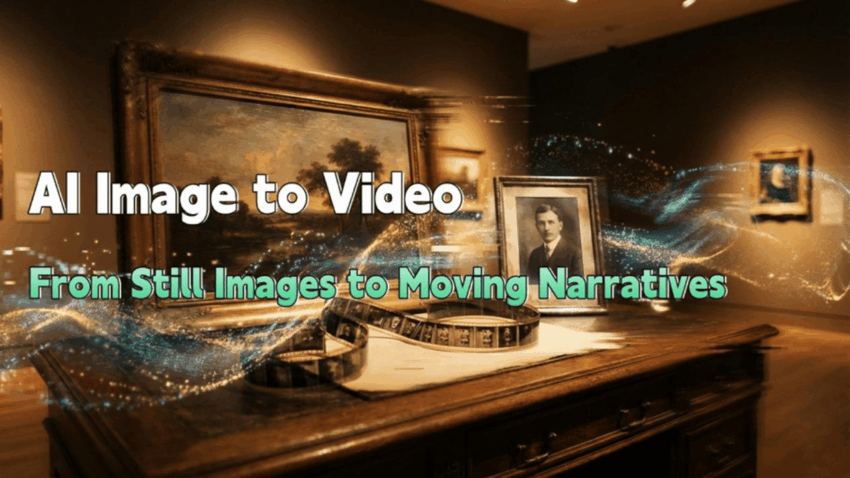
An exploration of AI Image to Video Generator as emerging tools in contemporary art, expanding visual storytelling, time-based media, and creative practice.
From Still Images to Moving Narratives: AI Image to Video and the Expanding Language of Contemporary Art
For centuries, visual art has grappled with the challenge of representing time. From painting to photography, artists developed ways to freeze moments, compress narratives, and suggest movement within static frames.
With the emergence of film and video art in the twentieth century, time itself became an artistic material—one that could unfold, transform, and decay before the viewer’s eyes.
Today, artificial intelligence is reshaping this long-standing dialogue. Rather than simply accelerating production, AI introduces new ways of generating motion from stillness and transforming language directly into moving images.
In this context, AI Image to Video Generator tools signal a broader shift in contemporary visual culture, where images are no longer endpoints but starting points for dynamic visual narratives.
Time and the Image: A Historical Context
Throughout art history, the relationship between image and time has remained central. Painting and photography captured isolated moments, while artists employed composition, gesture, and symbolism to suggest duration or movement.
The advent of cinema and video art marked a profound transformation. Time was no longer implied—it was experienced. Moving images introduced rhythm, sequence, and decay, altering how audiences engaged with visual narratives. These developments laid the groundwork for today’s digital and algorithmic approaches to time-based media.
AI as a New Time-Based Medium
Within contemporary discourse, time-based media traditionally refers to film, video, performance, and installation works that unfold over duration. AI-generated video occupies a distinct position within this lineage.
Generated Time vs. Recorded Time
Unlike cinema, which records events as they occur, AI-generated video produces motion through inference and interpretation. Time is synthesized rather than documented. The movement that emerges is speculative—an imagined continuation rather than a factual record.
This distinction carries significant artistic implications. When artists engage with Image to Video AI, they are not animating objects in a conventional sense. Instead, they invite an algorithm to propose how an image might evolve over time.
Speculative Motion and Visual Ambiguity
The resulting sequences often feel unstable, fluid, or dreamlike. Flickering forms, subtle distortions, and shifting textures resist linear storytelling and instead foreground atmosphere, perception, and memory.
These qualities align closely with traditions of experimental film and video art, where ambiguity and abstraction function as central aesthetic strategies.
From Static Image to Living Sequence
One of the most compelling aspects of AI-generated video lies in its redefinition of the static image.
Images as Temporal Starting Points
To Create AI Videos from Images is to reposition the image itself. A photograph, drawing, or digital composition becomes a generative source rather than a finished artifact. Motion unfolds from the image, transforming it into a temporal event.
This approach resonates strongly with contemporary artistic practices focused on archives, memory, and historical imagery. Static visuals—whether personal photographs or found materials—are activated through subtle movement, suggesting emotional and psychological dimensions rather than literal animation.
Re-Temporalizing the Image
Within gallery contexts, image-to-video works often blur the boundaries between photography, moving image, and installation. A single image may unfold into a continuously looping sequence, resisting narrative closure.
The emphasis shifts from representation to experience, inviting viewers to engage with duration, repetition, and transformation rather than fixed meaning.
Language as a Visual Catalyst
Beyond imagery, AI-generated video also introduces new relationships between language and visual form.
From Text to Moving Image
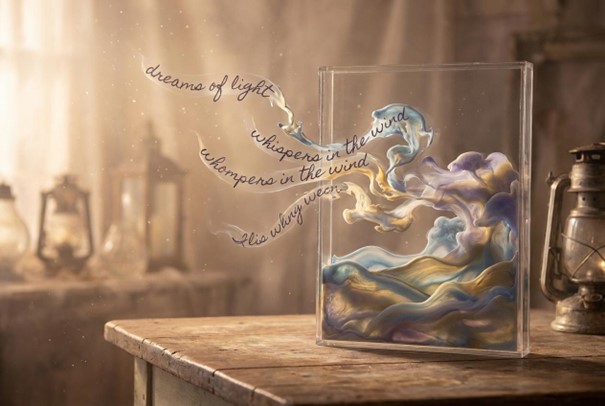
With text to Video AI, written language becomes a direct catalyst for visual generation. Descriptions, poetic fragments, or conceptual statements can be translated into moving images without passing through traditional stages of illustration or storyboarding.
This development holds particular significance for conceptual and language-based art practices, where text has long functioned as both material and meaning.
Interpretation Over Illustration
Rather than illustrating text literally, AI-generated visuals interpret language through associative and symbolic logic. The resulting images often diverge from authorial intent, introducing productive tension between word and image.
For many artists, this gap becomes a creative resource—revealing unexpected visual metaphors and reinforcing the instability of meaning central to contemporary art discourse.
Rethinking Visual Storytelling
Across image-based and text-based generation, AI-generated video challenges conventional notions of narrative.
Movement Without Destination
Traditional cinema relies on causality, progression, and resolution. By contrast, AI-generated motion often unfolds without narrative destination. Sequences loop, drift, or transform continuously, emphasizing presence over plot.
This approach aligns with contemporary visual culture, where ambient video, immersive installations, and non-linear experiences have become increasingly prominent.
Open Temporal Structures
Within this landscape, AI Image to Video Generator tools allow artists to engage time without committing to fixed narrative structures. The moving image becomes an open field rather than a closed sequence, inviting prolonged viewing and interpretive freedom.
Artistic Practice and Emerging Creative Workflows
Within contemporary artistic practice, AI-generated video is increasingly integrated not as a final output, but as part of an evolving creative workflow. Artists experimenting with Image to Video AI often treat the generated sequences as sketches, visual studies, or transitional materials that inform larger projects.
Rather than functioning as polished endpoints, these AI-generated videos operate as exploratory stages within the creative process. This approach reflects a broader shift in how digital tools are used in contemporary art—not to replace artistic decision-making, but to expand the field of visual experimentation.
From Output to Process
For visual artists working across media, the ability to Create AI Videos from Images introduces new possibilities for iteration and variation.
A single image may yield multiple temporal interpretations, each revealing a distinct emotional register or spatial logic. These variations can then be edited, layered, slowed, or fragmented, becoming components within installations, projections, or hybrid digital works.
This workflow prioritizes process over finality, aligning with contemporary art’s longstanding resistance to fixed outcomes and singular interpretations.
Dialogic Creation
Many artists describe working with AI-generated video as a dialogic experience rather than a directive one. The algorithm responds to visual input in ways that may surprise or even contradict expectations.
This unpredictability encourages a mode of creation grounded in responsiveness and intuition—qualities long associated with experimental film, improvisational practices, and generative art traditions.
Exhibition Contexts and Curatorial Perspectives
From a curatorial standpoint, AI-generated video presents new challenges and opportunities related to time, duration, and display.
Unlike conventional video works with defined beginnings and endings, AI-generated sequences often loop continuously or exist as evolving visual fields. This temporal openness disrupts traditional exhibition formats and invites alternative curatorial strategies.
Ambient and Spatial Uses
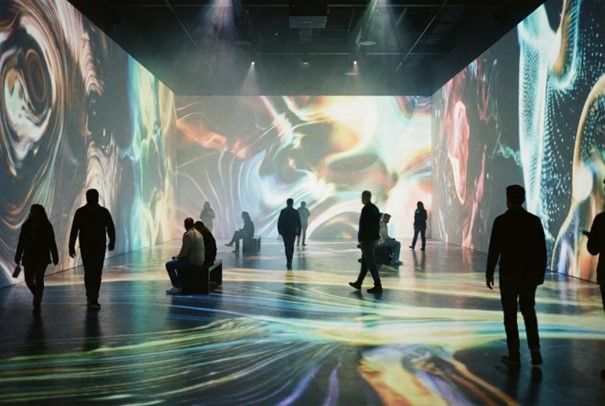
In gallery settings, AI-generated video frequently functions as an ambient or architectural element rather than a narrative centerpiece.
Projected onto walls, floors, or sculptural surfaces, these works blur the boundaries between image, environment, and viewer. The emphasis shifts away from storytelling and toward atmosphere, rhythm, and sensory immersion.
Rather than demanding focused viewing, such works encourage peripheral perception—allowing viewers to enter and exit the visual experience freely.
Text to Video in Curatorial Practice
Curators working with text to Video AI have explored its potential as a contextual rather than illustrative tool.
Instead of visualizing artworks directly, text-generated imagery may respond to curatorial statements, thematic keywords, or archival descriptions. The resulting visuals function alongside exhibited works, offering a speculative layer that enhances conceptual framing without imposing interpretation.
This approach reflects a growing curatorial interest in openness and ambiguity, positioning AI-generated imagery as a parallel voice rather than an explanatory device.
Authorship, Control, and Artistic Agency
As with many AI-driven artistic practices, questions of authorship and agency remain central.
When motion emerges through algorithmic inference, the traditional boundaries between creator, tool, and outcome become less distinct. These debates closely echo earlier discussions surrounding photography, video art, and generative systems.
Selection as Authorship
In the context of AI Image to Video Generator tools, authorship often resides in acts of selection rather than execution.
Artists define the initial conditions—choosing images, shaping prompts, curating outputs—and through these decisions, assert creative intent. The role of the artist shifts from direct maker to orchestrator, shaping systems rather than controlling every detail.
This position resonates with contemporary practices that foreground process, structure, and participation over manual production.
Embracing Uncertainty
For many artists, the partial loss of control introduced by AI is not a limitation but a creative resource.
Unexpected movements, visual distortions, and temporal shifts can reveal latent qualities within images and texts—qualities that might remain invisible through more deterministic methods. In this sense, AI operates as a mechanism for discovery rather than automation.
Ethical and Cultural Considerations
Beyond artistic practice, AI-generated video raises broader ethical and cultural questions.
As these tools become more accessible, distinctions between artistic experimentation and commercial production may blur. The challenge lies in maintaining critical engagement with the medium rather than adopting it unreflectively.
Originality and Visual Homogenization
Concerns surrounding originality, appropriation, and aesthetic convergence are particularly relevant. When many creators rely on similar systems, visual tendencies may begin to overlap.
In response, artists increasingly emphasize contextual specificity, conceptual framing, and intentional misuse—using AI not to generate generic imagery, but to articulate distinct artistic positions.
Institutional and Archival Questions
Museums and cultural institutions are also beginning to consider how AI-generated video fits within collection and preservation practices.
Works that exist as evolving processes rather than fixed files challenge traditional archival models, prompting institutions to rethink how time-based media is collected, documented, and preserved in the age of algorithmic generation.
Expanding the Language of Visual Art
Ultimately, the significance of AI-generated video lies not in technical novelty, but in its capacity to expand the language of visual art.
By enabling images and texts to unfold over time, Image to Video AI and text to Video AI introduce new modes of perception that exist between stillness and motion, intention and chance.
Rather than replacing established artistic media, AI-generated video extends existing practices in photography, film, and conceptual art. It offers artists a new way to engage duration, transformation, and interpretation—continuing a long tradition of artistic inquiry rooted in experimentation.
As artists, curators, and audiences continue to explore these evolving forms, AI-generated video remains an open field—defined less by technological capability than by the imagination and critical awareness brought to its use.