

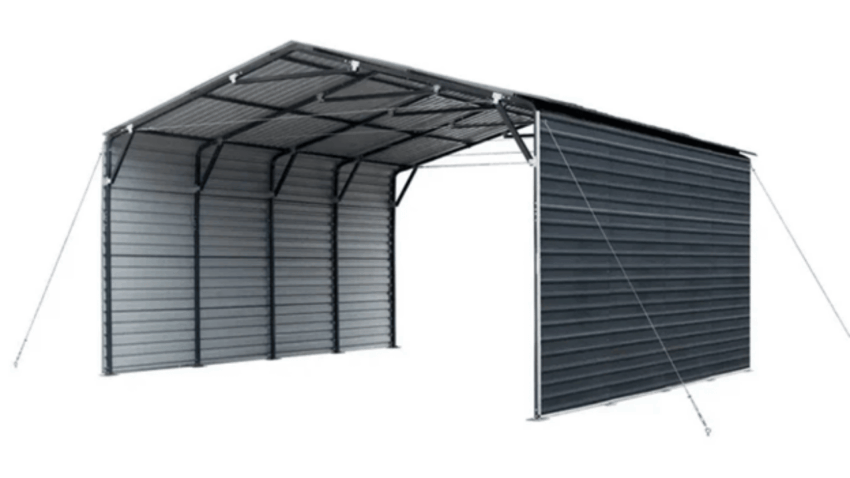
Two shelters with the same area are not the same shelter
A twenty by twenty structure and a twelve by thirty structure cover a similar amount of ground, and they behave completely differently once vehicles go under them. Choosing a square metal carport is choosing a particular way of parking rather than simply a quantity of cover.
A long, narrow metal carport parks vehicles in a line, one behind the other, which means the one at the back is trapped until the one at the front moves. A square footprint parks them side by side, and each leaves independently.
Side by side is what makes a square footprint worth it
Twenty feet of width is enough for two vehicles to sit beside each other inside a metal carport with room to open doors, which is the specific problem a narrow shelter never solves no matter how long it is.
For a household with two drivers on different schedules, that independence is the whole point. Nobody moves a vehicle at seven in the morning to let another one out, which is the daily friction a square metal carport removes.
The same square holds one vehicle and a working half
The alternative arrangement gives one bay to a vehicle and the other to everything else, which on most properties means a trailer, a mower, firewood, or a bench along the back wall.
That split works well precisely because the two halves are side by side rather than in line. Nothing has to be moved to reach anything else, and the vehicle comes and goes without disturbing the stored half.
Half height walls are a deliberate middle setting
Sidewalls that run ten feet up rather than to the roof are neither an open shelter nor a closed building, and that is the point of them.
They block driving rain, blowing snow, and the sun at the angles that actually reach under a roof, while the gap above still lets air move through. A fully enclosed metal carport traps humid air, and a fully open one stops very little weather.
Partial walls change what the wind does to it
An open shelter lets wind pass straight through with little effect. Adding walls turns those sides into surfaces that catch the wind, which means the anchoring has to be sized for a structure that now resists rather than passes air.
This is the part owners underestimate when adding walls to an existing frame. A homeowner near Amarillo enclosed the two windward sides of his and doubled the ground anchors at the same time, on the advice of the crew erecting it.
Walls can be added, so start with what is needed
Because the sidewalls bolt to the same frame, a metal carport can go up open and be closed in later as the use changes or the budget allows.
That path suits most properties better than deciding everything at once. A season of using it open shows exactly which sides the weather actually comes from, which is better information than any guess made from a catalog.
The roof still has to be reached to be maintained
Leaves, needles, and blown debris collect along the roof seams of any shelter, and a square footprint puts the middle of that roof further from any edge than a narrow one does. Planning how it gets cleared, before it is standing, saves improvising with a ladder in a windy October.
Deciding how a square shelter gets used
- Two vehicles: side by side, both leave freely
- One plus storage: split the square in half
- Enclose windward sides first: that is where weather comes from
- Anchor for walls: enclosed sides catch wind
Where a square shelter fits and where it does not
- Strength: two vehicles park independently
- Strength: walls can be added stage by stage
- Limit: needs a wider, squarer piece of ground
- Limit: not a locked or insulated building
Weighed against a long shelter of the same area, the square version demands more width on the property and returns two usable bays rather than one deep lane where everything has to come out in order.
Vehicle shelters keep being bought in stages
Owners increasingly buy the frame first and close it in over following seasons rather than committing to a fully enclosed building at once, which spreads the cost and lets real weather rather than guesswork decide which sides get walls.
That staged approach is why the steel shelters that TMG Industrial supplies come with sidewall panels that bolt on rather than being welded in from the start.
