

What Does It Mean to Evaluate an ASIC Miner?
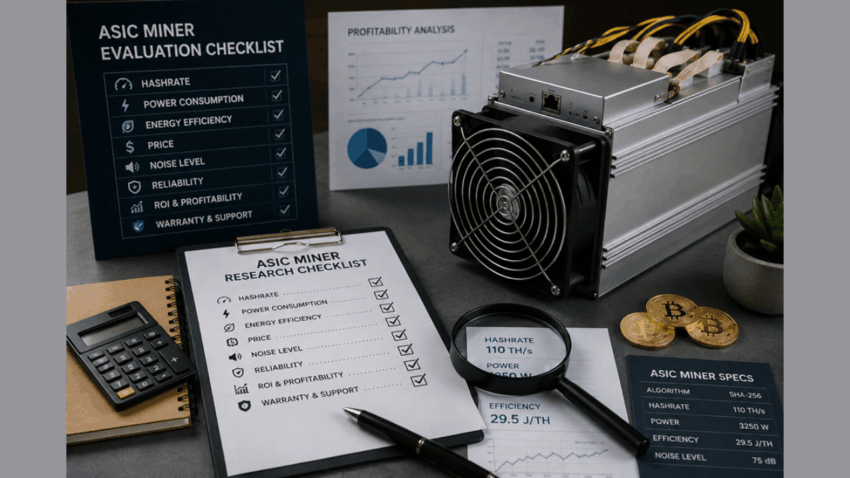
Evaluating an ASIC miner means checking whether the machine is actually suitable for your mining setup before you buy it. It is not only about reading the hashrate or comparing prices. A proper evaluation looks at how the miner will perform after it is installed, powered on, connected to a pool, and running every day.
This includes hashrate, power use, efficiency, electricity cost, cooling, noise, warranty, machine condition, and expected payback time. These details help buyers understand whether the miner is practical, too expensive to run, or better suited for another setup.
A miner may look strong on paper, but that does not always mean it is the right choice. The real value depends on how well the machine matches your electricity rate, budget, space, and mining goal.
Start With the Mining Algorithm
The first thing to evaluate is the algorithm. ASIC miners are designed for specific algorithms, so every miner cannot mine every coin.
For Bitcoin mining, the miner must support SHA-256. If the machine supports another algorithm, it will not be useful for Bitcoin, even if the hashrate looks high.
A good Bitcoin miner should match the coin you want to mine, the pool you plan to use, and the power setup available at your location. Once the algorithm is clear, the rest of the comparison becomes more useful.
Check Hashrate With Real Output in Mind
Hashrate shows how much mining power the machine can produce. For Bitcoin mining hardware, this is usually measured in TH/s. A higher hashrate means the miner can perform more mining calculations every second.
But hashrate should not be checked alone. A miner with a high hashrate may also use more power, create more heat, and need a stronger setup. So the better question is not only “How much hashrate does it have?” but “How much useful output does it give after running costs?”
This helps buyers avoid choosing a miner only because the number looks big. In real mining, hashrate matters only when it works well with power use, electricity cost, and uptime.
Compare Power Use Before Expecting Returns
Power use is one of the most important parts of ASIC miner evaluation. Since mining machines usually run 24/7, electricity becomes a daily cost, not a one-time expense.
Before buying, check the miner’s wattage and calculate how much it may cost to run each day. A machine using more power may still be useful if it gives stronger output, but the extra electricity cost must be counted.
The final result is not the revenue shown before expenses. The better number is what remains after electricity, pool fees, cooling, maintenance, and downtime are included.
Efficiency Shows How Practical the Miner Is
Efficiency shows how well the machine turns electricity into mining power. It is usually shown as J/TH. A lower J/TH number means the miner uses less energy for each terahash.
For a Crypto miner buyer, efficiency is one of the best signs of long-term value because it shows whether the machine can stay practical when mining conditions change.
A more efficient miner can be easier to run when electricity cost is high or mining difficulty increases. A less efficient miner may still work, but it can lose margin faster when the market becomes tighter.
Use a Real Model for Better Comparison
After checking the basic points, buyers can use a real model as a reference. For example, the S19k Pro can be used to understand how hashrate, power use, efficiency, and machine price work together in a real buying decision.
This does not mean every buyer should choose that model. It simply gives a practical comparison point. Once buyers understand one miner properly, they can compare similar machines more clearly.
For example, if one miner has a better price but higher power use, and another has better efficiency but a higher upfront cost, the comparison becomes easier when the numbers are placed side by side.
Check S19k Pro Profitability as a Practical Example
Checking S19k Pro profitability can help buyers understand how one specific model performs after electricity cost, pool fees, BTC price, and network difficulty are considered.
This type of model-level check is useful because it shows the difference between estimated revenue and real net return. A miner may show decent earnings before power cost, but the final result can change once electricity is added.
Before buying any ASIC miner, buyers should compare daily return, monthly return, power cost, and possible payback time. This gives a more realistic view than looking at one daily estimate only.
Think About Cooling, Noise, and Setup Space
A miner may have strong numbers, but it still needs the right place to run. ASIC miners create heat, and many models are loud during normal operation.
Before buying, check whether your setup area can handle the machine. The miner needs clean airflow, enough spacing, and a way for hot air to move out. If hot air keeps circulating around the miner, temperature can rise and performance may become unstable.
Noise should also be checked early. Some miners are not suitable for bedrooms, offices, or shared spaces. They may need a garage, separate mining room, warehouse, or hosting setup.
Review Warranty, Condition, and Seller Details
The same miner model can be sold in different conditions. It may be new, used, refurbished, open-box, or available as a pre-order. This should be checked clearly before payment.
Buyers should also review warranty, return policy, delivery timeline, accessories, power supply details, and seller support. These details matter because ASIC miners are technical machines, and downtime can affect mining returns.
A lower price may look attractive, but it should not be the only reason to buy. Clear product details and reliable support can make the buying process safer.
Match the Miner With Your Mining Goal
Every buyer has a different mining goal. Some want higher hashrate. Some want better efficiency. Some want lower entry cost. Some want a miner that can run longer with better power control.
That is why the right miner is not the same for everyone. A buyer with low electricity cost may choose a different machine than someone with expensive power. A hosted setup may also allow machines that are not practical at home.
Before buying, compare the miner with your own plan. Check your budget, electricity rate, space, cooling needs, noise level, warranty, and expected payback time.
Conclusion
Evaluating an ASIC miner before buying means checking how the machine will perform in real use. Hashrate is important, but power use, efficiency, electricity cost, cooling, noise, warranty, condition, and payback time all affect the final decision.
The best miner is not always the one with the highest output. It is the one that fits your setup and can run with a practical cost over time. For buyers who want to compare mining hardware with clear product details and practical options, ASIC Marketplace can be a useful place to review available miners before making the final decision.
