

Running a successful business requires clear communication, accurate documentation, and organized financial records. Whether you operate a small business, work as a freelancer, manage an online store, or provide professional services, creating professional invoices is essential. One document that plays an important role before a sale is finalized is the pro forma invoice.
A pro forma invoice provides buyers with an estimate of the products or services they intend to purchase before an official invoice is issued. It outlines expected costs, payment terms, product descriptions, shipping details, and other important transaction information. Using professional pro forma invoice templates helps businesses improve transparency, reduce misunderstandings, and streamline sales processes.
This guide explains what pro forma invoice templates are, why they matter, how to create them, and best practices for using them effectively.
What Is a Pro Forma Invoice?
A pro forma invoice is a preliminary document sent to a customer before goods or services are delivered. Unlike a final invoice, it is not a demand for payment but rather an estimate that summarizes the proposed transaction.
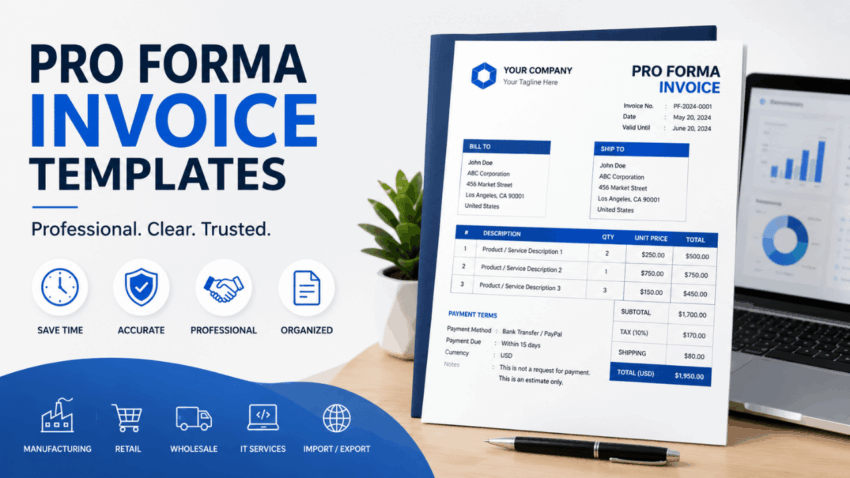
A typical pro forma invoice includes:
- Seller information
- Customer information
- Invoice number
- Issue date
- Product or service descriptions
- Quantity
- Unit price
- Estimated total amount
- Taxes
- Shipping charges
- Payment terms
The document helps both parties understand the details of the transaction before work begins or products are shipped.
Why Businesses Use Pro Forma Invoice Templates
Professional templates simplify invoice creation while maintaining consistency across every transaction.
Major benefits include:
- Faster document preparation
- Professional appearance
- Better customer communication
- Reduced pricing disputes
- Improved record keeping
- Easier approval processes
Templates also help businesses maintain a standardized format that employees can use consistently.
Key Components of a Professional Template
An effective pro forma invoice template should contain all relevant information.
Important sections include:
Business Information
Include:
- Company name
- Address
- Phone number
- Website
- Tax identification number
This information helps customers identify the seller quickly.
Customer Details
Include:
- Customer name
- Business name
- Billing address
- Shipping address
- Contact information
Accurate customer details reduce delivery and billing errors.
Product or Service Information
Every item should clearly specify:
- Description
- Quantity
- Unit price
- Estimated subtotal
Clear descriptions help customers understand exactly what they are purchasing.
Payment Information
Include payment details such as:
- Accepted payment methods
- Payment deadline
- Currency
- Terms and conditions
Providing this information early helps avoid confusion later.
Advantages of Using Templates
Templates offer several operational advantages.
Time Savings
Instead of creating invoices from scratch, businesses can reuse a professionally designed template for every customer.
Improved Accuracy
Preformatted sections reduce manual errors and help ensure every invoice contains complete information.
Professional Branding
Templates can include company logos, colors, and branding elements that create a polished appearance.
Better Customer Experience
Clear and organized documents build trust with customers and make purchasing decisions easier.
Industries That Benefit from Pro Forma Invoices
Many industries regularly use pro forma invoices.
Examples include:
- Manufacturing
- Wholesale distribution
- Retail
- Construction
- Marketing agencies
- IT consulting
- Freelancing
- Import and export
- E-commerce
Businesses involved in international trade often rely heavily on pro forma invoices during customs and shipping processes.
Digital Invoice Templates
Modern businesses increasingly use digital invoice templates instead of paper documents.
Benefits include:
- Faster delivery
- Easy editing
- Secure storage
- Reduced printing costs
- Cloud accessibility
- Simple sharing
Many organizations integrate digital invoices with accounting software to improve workflow efficiency.
Choosing the Right Template
Not every template fits every business.
When selecting a template, consider:
- Ease of customization
- Professional design
- Mobile compatibility
- Printing quality
- Currency support
- Tax fields
- Space for notes
- Branding options
Choosing a flexible template ensures it can grow with your business.
Many businesses also explore resources available through the Luzenta Website when comparing different invoice formats and organizing their invoicing workflow, especially if they want professionally designed layouts that can be customized for different industries and clients.
Common Mistakes to Avoid
Avoid these common errors when preparing pro forma invoices:
- Missing customer information
- Incorrect pricing
- Unclear product descriptions
- Missing payment terms
- Incorrect tax calculations
- Forgetting expiration dates
Carefully reviewing every invoice before sending it improves professionalism and reduces costly mistakes.
Best Practices
To maximize the effectiveness of your invoices:
- Use consistent formatting.
- Include complete business information.
- Double-check calculations.
- Keep language clear and professional.
- Save copies for future reference.
- Update templates regularly.
These practices improve efficiency while creating a positive customer experience.
Frequently Asked Questions (FAQs)
What is a pro forma invoice?
A pro forma invoice is a preliminary document that provides customers with an estimated summary of products or services before a final invoice is issued.
Is a pro forma invoice legally binding?
In most situations, a pro forma invoice is informational and is not considered a final request for payment or a legally binding sales invoice.
Who uses pro forma invoices?
Manufacturers, exporters, consultants, freelancers, retailers, service providers, and many other businesses use them during the sales process.
Can a pro forma invoice be customized?
Yes. Most templates allow businesses to add logos, colors, payment terms, tax information, and product details according to their needs.
What is the difference between a pro forma invoice and a final invoice?
A pro forma invoice provides an estimate before the transaction is completed, while a final invoice requests payment for delivered goods or completed services.
Why should businesses use templates?
Templates improve consistency, reduce preparation time, minimize errors, and create a professional appearance for every transaction.
Conclusion
Pro forma invoice templates are valuable tools for businesses that want to communicate pricing clearly before completing a sale. They improve transparency, streamline internal processes, and help customers understand the details of a proposed transaction before making purchasing decisions. By using well-designed templates, maintaining accurate information, and following invoicing best practices, businesses can strengthen customer relationships while improving efficiency and financial organization. Whether serving local clients or international customers, a professional pro forma invoice template remains an essential part of effective business documentation.
