

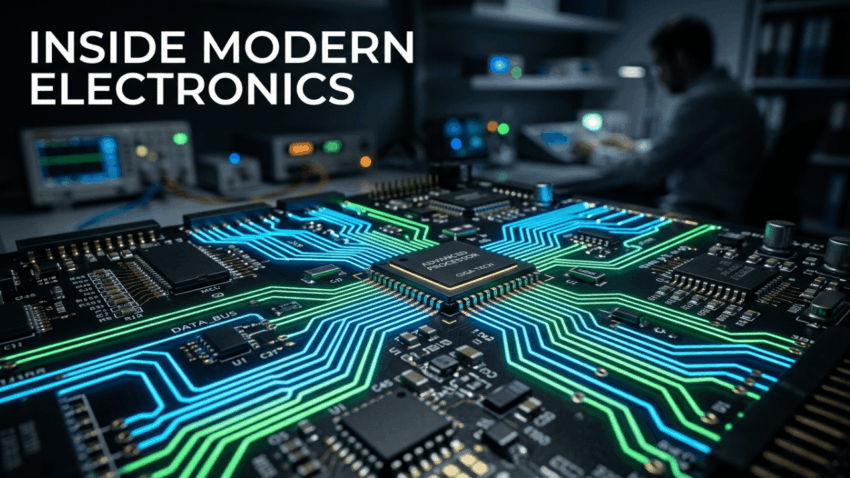
Almost every electronic device is built on top of the substrate provided by printed circuit boards. They serve as the mechanical and connection layers of electronic devices, from simple home devices to sophisticated aerospace systems. Knowledge of this technology is valuable to engineers, designers, and managers, as it allows them to fine-tune their hardware in order to satisfy concerns related to reliability and performance.
For more in-depth information you should view from PCB Fabrication Manufacturer&Supplier – LHD TECH
The drafted diagram of the circuit board undergoes a lengthy, systematically explained process of chemical, optic and mechanical procedures, which, if done correctly, satisfy all of the industry and material specifications. The slightest mistake and the entire circuit board is unusable, and this is why quality control is placed at the center of the board’s production.
View PCB Fabrication Manufacturer&Supplier – LHD TECH for More Details
This printed circuit board production book has everything you need to know from the basic explanations to the different ways of production, assembly, and prototype. This book also helps you to correctly determine the manufacturer of your choice, for example, LHD TECH, a manufacturer suitable for your needs and your project.
What is PCB Fabrication?
Fabrication is the first step in the manufacturing process of any product that requires electronic design. Printed circuit boards are the building blocks of electronic devices. This step comes before assembly, which can be thought of as the process of building the walls of a house. The walls are made of a firm, yet fragile insulator of electrical circuits, with layers of that insulator on either side of the walls made of the electrical pathways themselves.
Certain equipment is necessary to create the walls of the house that perfectly match the blueprints provided. The walls of a house can house the electronic design where necessary pieces can be assembled to complete electronic devices. The insulator of the walls can be thought of as the bare circuit board.
Importance of PCBs in Electronics
No modern electronics would really be possible without printed circuit boards (PCBs). They replace bulky and generally unreliable wiring with reliable and consistent copper traces. Because of the standardization and reliability that PCBs provide, devices can be manufactured at much smaller scales and with the same level of high performance that electronics require.
PCBs can also help with not just connecting components of an electronic device. PCBs also help with dissipating excess heat, reducing electronic noise, and help maintain integrity of the signal in high-speed applications. With the help of advanced multi-layer boards, more complicated circuits can be designed and integrated more easily. This also encourages smaller devices to be developed such as the modern miniaturized electronics including smartphones, the various modern and miniaturized medical devices, and the many miniaturized devices found in modern vehicles.
Overview of the PCB Manufacturing Process
A digital file to a physical board transition consists of a long series of design passed followed by numerous electrical tests. For consistency of production batches a sequence of operations is usually followed by manufacturers.
A board moves through a series of operations to go from a digital file to a physical board. These operations may include the board being designed, the circuit image transferred through photolithography, the unwanted copper removed through chemical etching, the vias and mounting holes being drilled, and a coating being laminated. There a series of inspections and finishing touches. Environmental controls of varying types such as, clean rooms, are used to minimize the the potential for contamination.
The PCB Fabrication Process
Fabricating a printed circuit board requires precise execution across multiple distinct stages.
Step 1: Designing the PCB
The process begins with the engineering team creating a digital model using specialized CAD software, such as Altium Designer or Eagle. This digital blueprint dictates the placement of every copper trace, drill hole, and component pad. Once the design is finalized, it is exported into a standardized format, usually Extended Gerber (RS-274X) or ODB++.
Manufacturers perform a Design for Manufacturability (DFM) check upon receiving these files. This critical review ensures the design aligns with the factory’s production capabilities. The DFM check identifies potential issues, such as traces placed too close together or drill holes that are too small, preventing costly errors during physical production.
Step 2: Printing the Circuit
Once the design passes the DFM check, the manufacturer uses a specialized printer, known as a plotter, to create photo films of the PCB. These films act as exact negatives of the board’s layers. Clear areas represent non-conductive material, while black areas represent the conductive copper traces.
The inner layers of the board feature copper pre-bonded to the fiberglass substrate. The manufacturer applies a layer of photoresist—a light-sensitive chemical—over the copper. Ultraviolet light is then passed through the photo film onto the board. The light hardens the photoresist over the desired copper traces. The unhardened photoresist is washed away with an alkaline solution, exposing the unwanted copper.
Step 3: Etching and Drilling
With the required copper protected by the hardened photoresist, the board enters a chemical bath to remove the exposed, unwanted copper. This process is called etching. A copper solvent dissolves the unprotected metal, leaving only the precise circuitry outlined in the original design. Once the etching is complete, a different chemical removes the remaining protective photoresist.
Drilling establishes the pathways for components and structural mounting. An automated drilling machine uses computer numerical control (CNC) to drill holes precisely according to the Gerber files. For complex, multi-layer boards, laser drilling may be utilized to create microvias that connect internal layers.
Step 4: Layering and Lamination
Multi-layer PCBs require joining several individual boards together. The layering process involves alternating layers of the etched copper substrate with layers of prepreg (fiberglass infused with epoxy resin). A layer of copper foil is added to the top and bottom of the stack.
The lamination process uses extreme heat and pressure to bond these materials. The stack is placed into a lamination press, where the heat melts the epoxy within the prepreg, and the pressure fuses the layers into a single, solid board. After lamination, the board undergoes further processing, including plating the drilled holes and applying a solder mask to protect the surface circuitry.
PCB Assembly Techniques
Fabrication creates the bare board; assembly turns it into a functional device by attaching the electronic components.
Types of PCB Assembly Services
Assembly services are generally categorized into three types based on the project phase and volume. Prototype assembly focuses on small batches used for testing and validation. Low-volume assembly produces limited runs for specialized equipment or initial product launches. High-volume assembly involves automated, mass production for consumer electronics and widespread commercial applications.
Surface Mount vs. Through-Hole Technology
Two primary methods dominate the assembly process. Surface Mount Technology (SMT) involves placing components directly onto the surface of the board. This method is highly automated, fast, and ideal for compact, high-density designs. SMT components are typically much smaller than their older counterparts.
Through-Hole Technology (THT) involves inserting component leads into drilled holes and soldering them on the opposite side. THT provides stronger mechanical bonds, making it suitable for heavy components like large capacitors, connectors, and parts that will experience physical stress. Many modern boards use a mixed-technology approach, combining SMT for efficiency and THT for structural integrity.
Benefits of Professional PCB Assembly
Partnering with a professional assembly service ensures high reliability and compliance with industry standards. Professional assemblers utilize automated optical inspection (AOI) and X-ray testing to detect microscopic soldering defects that human operators might miss. Furthermore, established assembly partners handle the procurement of components, managing supply chain logistics and reducing the risk of acquiring counterfeit parts.
Prototyping in PCB Fabrication
Validating a design before committing to mass production prevents catastrophic financial losses. Prototyping is an essential phase in hardware development.
What is a PCB Prototype?
A PCB prototype is an early sample or model built to test a concept or process. It allows engineers to verify that the circuit performs as expected under real-world conditions. Prototypes are typically produced in small quantities, ranging from a single board to a few dozen units.
Rapid Prototyping Techniques
Rapid prototyping prioritizes speed, allowing engineering teams to iterate designs quickly. This often involves using standardized material thicknesses and bypassing complex surface finishes. Some manufacturers offer quick-turn services that can deliver a bare board in as little as 24 to 48 hours. By utilizing simplified layer stacks and avoiding complex blind or buried vias during the initial testing phase, designers can drastically reduce lead times.
Advantages of Prototype PCBs
Testing a physical prototype exposes design flaws that software simulations may overlook. Engineers can physically measure thermal output, test signal integrity with an oscilloscope, and verify mechanical fit within the final product enclosure. Fixing an error during the prototype stage costs a fraction of addressing the same issue after a product has entered full-scale production.
Choosing a PCB Manufacturer
The quality of the final product depends heavily on the capabilities of the chosen manufacturing partner.
Key Factors to Consider
When evaluating a manufacturer, engineers should assess their technical capabilities, quality certifications, and lead times. A capable manufacturer must support the specific requirements of the design, such as high-layer counts, flexible substrates, or impedance control. Certifications like ISO 9001 or specialized aerospace and automotive standards indicate a commitment to quality management.
Comparison of PCB Manufacturers
Comparing manufacturers involves reviewing their minimum order quantities, pricing structures, and testing protocols. Some facilities specialize exclusively in rapid prototyping and struggle with high-volume scaling. Others require massive minimum orders but offer low per-unit costs. The ideal partner can seamlessly transition a project from the initial prototype phase through to mass production without requiring a redesign.
Top PCB Manufacturers in the Industry
The global market features numerous high-quality fabrication facilities. Organizations frequently seek partners who offer transparent communication, strict quality control, and robust engineering support. Companies like LHD TECH provide comprehensive fabrication and assembly services, ensuring that complex designs are manufactured accurately and efficiently. Selecting a manufacturer with a proven track record ensures that hardware projects meet their technical requirements and production deadlines.
Frequently Asked Questions
What materials are commonly used in PCB manufacturing?
The most common material for the non-conductive substrate is FR4, a glass-reinforced epoxy laminate. High-frequency applications may use specialized materials like PTFE (Teflon) or polyimide for flexible circuits. The conductive traces are almost exclusively made of copper.
How long does the fabrication process take?
Standard fabrication lead times range from one to three weeks, depending on the complexity and layer count of the board. Quick-turn prototyping services can expedite this process to just a few days, though this usually incurs a premium cost.
What is a solder mask?
A solder mask is the thin, protective polymer layer applied over the copper traces on a PCB. It prevents solder bridges from forming between closely spaced pads during the assembly process. This mask also gives the PCB its characteristic green (or other specified) color and protects the traces from oxidation.
Next Steps for Your Fabrication Project
Navigating the complexities of printed circuit board production requires careful planning and a deep understanding of manufacturing capabilities. By aligning your digital design with established fabrication and assembly protocols, you can ensure a reliable, high-performing final product.
To ensure the success of your next hardware initiative, review your CAD files for manufacturability and define your testing requirements early in the design phase. For professional guidance and high-quality production, consult with a trusted manufacturing partner like LHD TECH to discuss your specific technical requirements and project timelines.
