

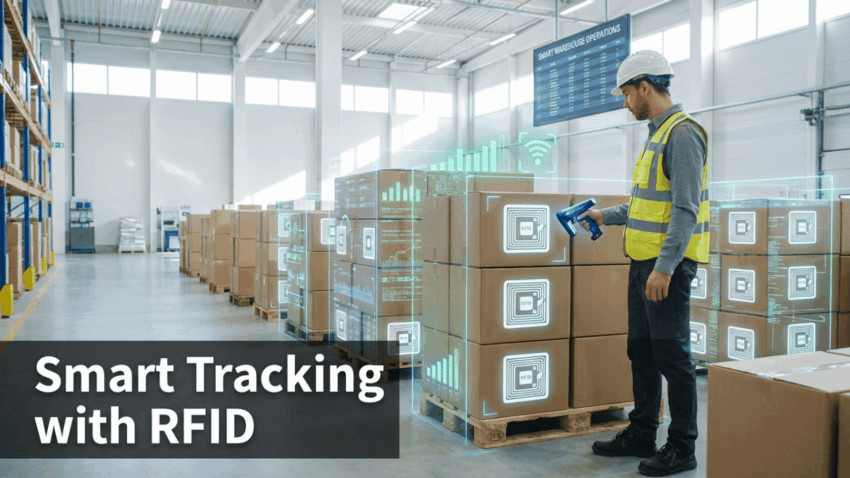
Radio Frequency Identification (RFID) technology has become an essential part of modern tracking, identification, and automation systems. From retail inventory management to access control and logistics, RFID systems are transforming how businesses operate. At the core of this technology lies the RFID reader—a device responsible for communicating with RFID tags and extracting valuable data.
In this comprehensive guide, we will explore how RFID readers work, their components, types, applications, and how to choose the right system for your needs. We will also highlight the importance of using a handheld RFID reader in various real-world scenarios.
What Is an RFID Reader?
An RFID reader is a device that uses radio waves to communicate with RFID tags. It sends out signals through an antenna, which activates nearby RFID tags. These tags then transmit their stored data back to the reader, allowing the system to identify, track, or authenticate objects.
RFID readers are commonly used in industries like retail, healthcare, manufacturing, logistics, and security. They can be fixed in one place or portable, depending on the use case.
Basic Components of an RFID System
To understand how RFID readers work, it’s important to first look at the complete RFID system. It consists of three main components:
1. RFID Tags
RFID tags are small electronic devices attached to objects. They store data and respond to signals from RFID readers. Tags can be:
- Passive (no internal power source)
- Active (battery-powered)
- Semi-passive (battery-assisted)
2. RFID Reader
The reader is responsible for sending signals to the tags and receiving data from them. It processes the information and sends it to a computer or database.
3. Antenna
The antenna enables communication between the reader and tags by transmitting and receiving radio signals.
How RFID Readers Work: Step-by-Step
RFID readers operate through a simple but highly efficient process. Here’s a breakdown of how they function:
1. Signal Transmission
The RFID reader emits radio frequency signals through its antenna. These signals create an electromagnetic field in the surrounding area.
2. Tag Activation
When an RFID tag enters this field, it gets activated. Passive tags draw energy from the reader’s signal, while active tags use their internal battery.
3. Data Transmission
Once activated, the tag sends its stored data back to the reader using radio waves. This data typically includes a unique identifier or additional stored information.
4. Data Processing
The reader receives the data and converts it into a digital format. It then sends this information to a connected system, such as a computer or cloud-based software.
5. Action Execution
The system processes the data and performs specific actions, such as updating inventory, granting access, or tracking movement.
Types of RFID Readers
RFID readers come in various forms, each designed for specific applications.
1. Fixed RFID Readers
These readers are installed at specific locations like entry points, warehouses, or production lines. They continuously scan for tags within their range.
Common Uses:
- Inventory management
- Access control
- Supply chain tracking
2. Mobile RFID Readers
Mobile readers are portable devices that can be carried around. They offer flexibility and are ideal for dynamic environments.
A popular option is the handheld RFID reader, which allows users to scan items quickly and efficiently without being tied to a fixed location.
Benefits of Handheld RFID Readers:
- Portability and ease of use
- Real-time data collection
- Increased efficiency in field operations
- Ideal for inventory audits and asset tracking
3. Integrated RFID Readers
These readers combine the antenna and reader into a single unit. They are compact and easy to install.
Frequency Ranges of RFID Readers
RFID systems operate at different frequency ranges, each with its own characteristics:
Low Frequency (LF)
- Range: Up to 10 cm
- Uses: Animal tracking, access control
- Advantage: Works well around liquids and metals
High Frequency (HF)
- Range: Up to 1 meter
- Uses: Smart cards, library systems
- Advantage: Moderate read range and speed
Ultra-High Frequency (UHF)
- Range: Up to 12 meters or more
- Uses: Logistics, retail, warehouse management
- Advantage: Long range and fast data transfer
Key Features of RFID Readers
When evaluating RFID readers, several features play a critical role:
1. Read Range
The maximum distance at which a reader can detect tags. UHF readers typically offer the longest range.
2. Read Speed
The ability to scan multiple tags simultaneously, which is crucial for high-volume environments.
3. Connectivity
RFID readers can connect via USB, Wi-Fi, Bluetooth, or Ethernet, depending on the application.
4. Durability
Industrial environments require rugged readers that can withstand harsh conditions.
5. Compatibility
Readers should be compatible with the tags and software used in your system.
Applications of RFID Readers
RFID readers are used across a wide range of industries. Here are some common applications:
Retail
- Inventory tracking
- Anti-theft systems
- Checkout automation
Healthcare
- Patient tracking
- Equipment management
- Medication verification
Logistics and Supply Chain
- Shipment tracking
- Warehouse management
- Asset monitoring
Manufacturing
- Production line tracking
- Quality control
- Tool management
Access Control
- Employee identification
- Secure entry systems
- Time and attendance tracking
Advantages of RFID Readers
RFID technology offers several benefits over traditional barcode systems:
- No Line of Sight Required: Tags can be read without direct visibility.
- Faster Data Collection: Multiple tags can be scanned simultaneously.
- Improved Accuracy: Reduces human error.
- Enhanced Security: Data can be encrypted.
- Automation Capabilities: Enables real-time tracking and monitoring.
Challenges of RFID Technology
Despite its advantages, RFID also comes with some challenges:
- Higher Initial Cost: Compared to barcode systems
- Signal Interference: Metals and liquids can affect performance
- Privacy Concerns: Unauthorized scanning risks
- Complex Implementation: Requires proper setup and integration
Choosing the Right RFID Reader
Selecting the right RFID reader depends on your specific needs. Consider the following factors:
1. Application Requirements
Determine whether you need a fixed or mobile solution. For on-the-go operations, a handheld RFID reader is often the best choice.
2. Environment
Assess the operating conditions, such as temperature, humidity, and potential interference.
3. Frequency Type
Choose the appropriate frequency based on your required range and application.
4. Budget
Balance cost with performance and scalability.
5. Integration
Ensure the reader can integrate seamlessly with your existing systems.
Future of RFID Readers
RFID technology continues to evolve with advancements in IoT (Internet of Things) and AI. Modern RFID readers are becoming smarter, more efficient, and capable of handling large volumes of data in real time.
Emerging trends include:
- Integration with cloud platforms
- Enhanced data analytics
- Improved security features
- Smaller and more energy-efficient designs
Conclusion
RFID readers play a crucial role in modern identification and tracking systems. By using radio waves to communicate with RFID tags, they enable seamless data collection and automation across various industries.
Understanding how RFID readers work helps businesses make informed decisions when implementing RFID solutions. Whether you are managing inventory, tracking assets, or improving operational efficiency, choosing the right reader—especially a handheld RFID reader for mobile applications—can significantly enhance your workflow.
As technology continues to advance, RFID systems will become even more integral to smart business operations, offering greater accuracy, efficiency, and scalability.
