

Introduction
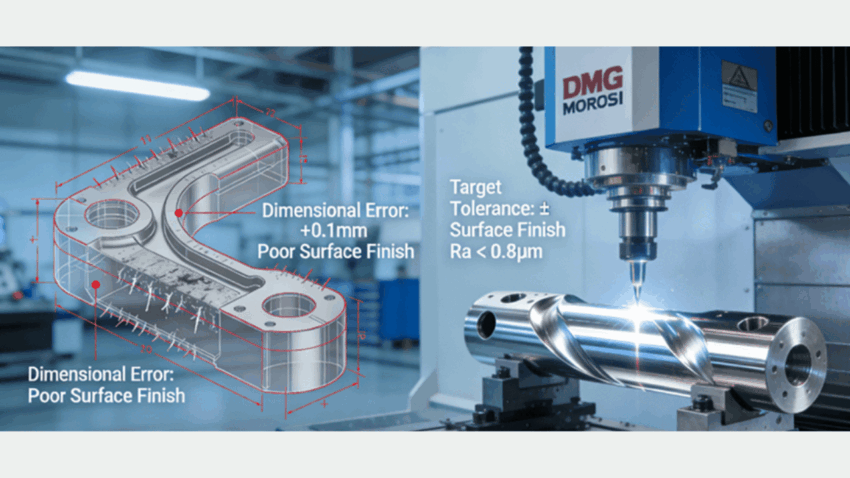
In today’s increasingly precise manufacturing landscape, companies face significant challenges stemming from insufficient accuracy, production delays, and cost overruns. Traditional machining methods often struggle to meet the stringent micron-level tolerances demanded by modern industries such as aerospace, medical devices, and high-end electronics. The root causes frequently lie in aging equipment, outdated processes, a lack of specialized expertise, and imperfect quality control systems. These factors collectively lead to cumulative manufacturing errors, ultimately compromising product performance and market competitiveness.
This article delves into the critical technical elements of CNC milling services, offering a comprehensive solution from equipment selection to process optimization. It aims to empower businesses to achieve a breakthrough in manufacturing precision. The following five key questions will systematically reveal the core advantages of modern CNC milling.
How Does CNC Milling Achieve Micron-Level Precision?
Achieving micron-level precision is the cornerstone value of CNC milling services, relying on a sophisticated, synergistic technological system far beyond conventional machinery.
High-Precision Hardware and Intelligent Control
The foundation of micron-level accuracy lies in cutting-edge hardware. The core of CNC Milling Machining is the high-performance CNC controller, high-response servo motors, and a full closed-loop feedback system. The controller translates digital instructions into precise tool paths, while the servo system, coupled with linear scales on ball screws or guideways, provides real-time positional feedback. This closed-loop control allows for instant compensation of mechanical transmission errors, ensuring the tool path is executed with absolute fidelity.
Advanced Process Compensation Techniques
Even with ideal hardware, environmental and process disturbances must be actively mitigated.
- Thermal Deformation and Vibration Control:
Heat generated during machine operation causes minute structural expansion, affecting accuracy. Advanced machines employ constant-temperature cooling systems, symmetrical thermal designs, and thermal error compensation software to stabilize the machining environment. Simultaneously, optimizing machine dynamics, using vibration-damping foundations, and adjusting cutting parameters effectively suppress machining vibrations. - Intelligent Tool Wear Compensation:
Tool wear is a primary factor in accuracy degradation. Through online monitoring systems or preset tool life management, the system can automatically apply wear compensation values or initiate tool changes, ensuring consistent cutting dimensions. This is an indispensable part of an efficient CNC milling machining process.
Systematic Quality Assurance
Precision is not accidental but the inevitable result of systematic management. Leading providers adhering to the Precision Manufacturing Services philosophy hold authoritative certifications such as ISO 9001 (Quality Management System) and AS9100D (Aerospace Quality System). These certifications mandate standardized, traceable processes from design review and process control to final inspection. Research from the Society of Manufacturing Engineers (SME) also highlights that standardization is the bedrock for ensuring part interchangeability and reliability in precision manufacturing. A practical example of this philosophy can be found in this comprehensive guide on CNC precision milling.
Which Materials Are Most Suitable for CNC Milling?
The exceptional compatibility of CNC milling allows it to process a wide range of materials, from high-performance metals to specialty engineering plastics. Correct CNC milling materials selection directly impacts cost, lead time, and the final part’s performance.
Metallic Materials are the mainstay of CNC milling. Aluminum alloys are the preferred choice for prototypes and lightweight components due to their excellent strength-to-weight ratio, good thermal conductivity, and machinability. Stainless steels (e.g., 304, 316) offer superior corrosion resistance and strength, commonly used in medical and food machinery. Titanium alloys, known for their extremely high specific strength, heat resistance, and biocompatibility, are critical for aerospace and implantable medical devices, though they require specialized tooling and parameters.
In the realm of Engineering Plastics, materials like PEEK (Polyether Ether Ketone) and Nylon (e.g., PA66) are widely used for their self-lubricating properties, chemical resistance, and insulation. PEEK is particularly suited for high-temperature, high-strength demanding environments.
Selecting different materials necessitates customized CNC Machining Solutions. For instance, machining titanium requires extremely rigid machines, sharp carbide tools, lower cutting speeds, and high-pressure coolant to prevent workpiece overheating. Machining aluminum allows for higher spindle speeds and feed rates. Material properties directly influence tool geometry, coating selection, and coolant type. Technical guidelines from the Association of German Engineers (VDI) provide detailed references on material machinability. For the automotive industry, suppliers compliant with IATF 16949 certification ensure that materials meet stringent industry standards throughout the entire supply chain to finished part, guaranteeing quality consistency for volume production.
Why Are 5-Axis CNC Machining Centers Superior to 3-Axis?
The 5-axis CNC milling machining center represents a leap in geometric freedom within Industrial Automation Technology. Compared to traditional 3-axis machines, it enables multi-sided machining of complex parts in a single setup, offering revolutionary advantages.
Fundamental Enhancement in Geometric Freedom
A 3-axis machine (X, Y, Z linear axes) has a fixed tool orientation, posing limitations for complex surfaces. A 5-axis machine adds two rotational axes (e.g., A/C or B/C), allowing the tool to approach the workpiece from virtually any angle. This means for parts with deep cavities, undercuts, or continuous complex surfaces like impellers, turbines, and precision molds, 5-axis technology enables complete machining without multiple re-fixturing.
Advantages in Accuracy, Efficiency, and Cost
- Enhanced Accuracy and Surface Finish:
Reducing setup times directly minimizes error accumulation from datum changes, improving overall geometric tolerances. Furthermore, 5-axis machining can utilize the tool’s side cutting edge instead of its tip, achieving better surface finishes and extending tool life. - Reduced Cycle Time and Lower Cost:
Complex parts often require special fixtures and multiple operations. 5-axis machining simplifies or even eliminates the need for complex fixture design and manufacturing, consolidating multiple operations into a single setup. This significantly reduces production preparation and machining time, demonstrating notable economic benefits even for small batches and prototyping. This is a core value of professional CNC milling services.
Integrated Automation and Intelligent Inspection
Modern 5-axis centers are often integrated with Automated Tool Changers (ATC) and pallet changers for extended unmanned operation. Coupled with on-machine probing, they enable real-time inspection of critical dimensions during machining, allowing for closed-loop compensation and ensuring stability and consistency in batch production, forming a key component of smart manufacturing cells.
How Do CNC Milling Services Reduce Production Costs?
Professional CNC milling services enable significant cost reduction in volume production through systematic optimization. Batch processing allows for economies of scale and dedicated fixture use, lowering unit costs and material waste. Implementing predictive tool-change strategies and rigorous preventive maintenance minimizes scrap and unplanned downtime.
Furthermore, digital tools like CAM software for collision detection and FEA for parameter simulation virtually eliminate costly trial-and-error, ensuring first-part success. Adherence to standards like ISO 14001 also promotes sustainable, resource-efficient practices. Collectively, these strategies can reduce total production costs by 15-30% while enhancing delivery reliability.
How to Choose a Reliable CNC Milling Service Provider?
Selecting a reliable CNC Milling Solutions provider is critical for success. A thorough evaluation should assess seven key metrics: modern equipment capability, rigorous quality control with tools like CMMs, and relevant certifications (ISO 9001, IATF 16949, AS9100D) that underpin true Precision Manufacturing Services.
Additionally, consider their engineering support for DFM, proven delivery reliability, complete cost transparency, and professional customer service. Conducting site audits and securing detailed contracts are essential steps. Fostering a long-term partnership, as demonstrated by industry leaders like JS Precision, allows for deeper collaboration, driving sustained cost optimization and innovation beyond a simple vendor transaction.
Conclusion
Modern CNC milling delivers an optimal balance of precision, efficiency, and cost by integrating advanced technology, rigorous quality control, and deep engineering expertise. Its capabilities—from micron-level accuracy and multi-material flexibility to 5-axis complexity and systematic cost control—form a core strategic advantage, driving innovation and supply chain resilience. To leverage this, upload your design for a free manufacturability analysis and quote within 24 hours, or access our resource library for in-depth industry insights.
Author Bio
This article was written by a manufacturing technology expert with over 15 years of hands-on experience in the precision engineering field. The author has been deeply involved in the R&D and manufacturing of multiple aerospace and high-end medical device projects, specializing in CNC machining process optimization, new material applications, and quality management system implementation. Currently, the author provides technical consulting and solution services for leading manufacturers.
FAQ
Q1: What is the minimum tolerance achievable with CNC milling?
A: Under standard conditions, advanced CNC milling services can achieve tolerances of ±0.005mm. For specific materials, optimized processes, and controlled environments, even higher precision of ±0.002mm is possible, depending on material properties and part geometry complexity.
Q2: Is 5-axis CNC machining suitable for low-volume production?
A: Yes, absolutely. By reducing or eliminating the need for multiple setups and complex fixtures, 5-axis machining demonstrates cost-effectiveness even in low-volume production and prototyping. It reduces total production time and improves accuracy consistency, making it particularly economical for structurally complex, high-value parts.
Q3: How to ensure the surface quality of CNC machined parts?
A: Excellent surface roughness (e.g., Ra 0.8μm to 0.4μm) can be achieved directly by optimizing cutting parameters (speed, feed, depth of cut), selecting appropriate specialized tools (like finishing tools with corner radius), and implementing strict process control. For higher requirements, subsequent surface treatment processes like grinding or polishing can be applied.
Q4: What are the main differences between CNC milling aluminum and steel parts?
A: The primary differences lie in machining parameters and process settings. Aluminum typically allows for higher spindle speeds and feed rates and often uses air blast or specific coolants to prevent chip welding. Steel (especially stainless steel, tool steel) requires more robust tooling, more conservative cutting parameters, and higher-performance coolants for heat dissipation and chip breaking, as it requires greater cutting forces.
Q5: What is the typical lead time from design to delivery?
A: For parts with simple geometry, the standard lead time is typically 3-5 business days. For parts with complex geometries requiring multi-axis machining or special surface treatments, the lead time may be 7-10 business days or longer. The exact timeframe depends on process complexity, material availability, and post-processing requirements.
